
By Sucheta Chaurasia
Recently, the Rashtriya Swayamsevak Sangh (RSS) celebrated its 100 years of journey – gloriously titled “100 Years of Sangh Journey: New Horizons” with a two-day lecture series in Mumbai. The programme saw the coming together of senior RSS leaders and some of the most recognisable celebrities from the Hindi film industry.
Over the two days, the lectures invited over 1200 people, along with several celebrities, including Salman Khan, Vicky Kaushal, Akshay Kumar, Karan Johar, Ananya Panday, Shilpa Shetty, Raveena Tandon, and Madhur Bhandarkar.
The celebrities went all gaga over the two lectures. While Karan Johar found RSS Chief Mohan Bhagwat’s humour “very amusing”, Vicky Kaushal was star-struck to see him in person, and Shilpa Shetty claimed that she is a “truly big fan” of the RSS Chief.
Over the years, Bollywood celebrities have mostly maintained a safe and neutral distance from active politics. What is striking here in this star-studded event is not only the celebrities’ indifference towards the controversial RSS – the genesis of Vishwa Hindu Parishad (VHP) and the Bhartiya Janta Party (BJP)- but also their blind reverence towards these right-wing Hindu outfits.
This poses a rather uncomfortable question: Why does India rarely witness the kind of open political dissent as is often seen in its Hollywood counterpart?
Hollywood has often seen top artists and celebrities publicly challenge the reigning government policies unapologetically. The likes of big shots such as Meryl Streep and Mark Ruffalo have been continuously voicing their anger towards Trump’s policies on immigration and environmental rollbacks, often being seen publicly participating in protests.
Only recently, at the 2026 Grammys, stars such as Billie Eilish and Olivia Rodrigo remarked sternly, “ICE OUT” – voicing their solidarity with immigrants and their anger against the U.S. government’s immigration enforcement measures.
At the 2026 Super Bowl halftime show, Bad Bunny, the Puerto Rican music genius, made an unprecedented show of cultural and political resonance. His stellar performance, highlighting a pan-American culture, and lauded by top Hollywood celebrities, became a global sensation, igniting conversations about identity and belonging, much to the anger of President Donald Trump and right-wing commentators.
Art is political, after all. Bad Bunny’s show highlights how art can become a potent tool for channeling dissent against nationalist narratives. Such widespread dissent against the policies of the ruling government seems unthinkable in India at the moment.
The relation between popular Indian culture and political discourse is indicative of wider social and structural forces. Notably, research on Bollywood’s connection to politics finds that Indian film stars often avoid direct political activism because they fear widespread backlash and damage to their careers, resulting in the loss of a significant part of their audience. Open dissent by Indian celebrities in the public eye tends to be rare and is usually expressed individually rather than through supporting mega institutions, which does come with some consequences.
When, on separate occasions in 2015, Aamir Khan and Shah Rukh Khan expressed their concerns over the lack of tolerance in the country, their critique of ‘nationalism’ was questioned, their films were blacklisted, and their fanbase was diminished. They were met with slogans such as “leave the country”.
During the anti-Citizenship Amendment Act (CAA) protests in 2019–20, Swara Bhasker and Richa Chadha were openly seen supporting the demonstrators in public. Of course, they both faced massive online abuse and a plethora of legal complaints.
Evidently, India has had its rare occasions where some celebrities voiced their concern publicly but were quick to face fallout from their fans and political groups. Hence, they retorted to silence, even when the nation was burning with protests and public demonstrations. The Bollywood biggies chose to remain silent on domestic issues, be it the farmers being upset over new laws in 2021 or the illegal bulldozing of homes of minorities, while they were quick to show solidarity against the killing of George Floyd in the US.
Individuals like veteran actor Naseeruddin Shah have often articulated concerns about the diminishing public space for dissent and critical engagement. Recently, he was disinvited to the Jashn-e-Urdu organised by the Urdu department of Mumbai University on February 1. The university emailed Shah at the very last minute that he did not need to attend the event, only on the 31st of January, and was brazen enough to tell the awaiting audience that the actor himself had refused to be there.
In light of this unfortunate event, social commentator Ramchandra Guha remarked that Shah’s “moral clarity and courage are in striking contrast to his pusillanimous peers in Bollywood.” Guha is right.
The celebrities now are faced with two options – either to choose silence or to shamelessly side with the ruling government to keep themselves in business and keep their films running. It is this fear that perhaps led so many celebrities to make a public display of their support for RSS – the largest NGO in the world (which, as a matter of fact, is not even a registered organisation).
It is the same RSS that once staged a massive backlash against Deepika Padukone for allegedly maligning the image of a Rajput princess. Back in 2017, Hindu outfits such as Karni Sena, staged massive protests against Padukone, especially in BJP-ruled states such as Rajasthan, Uttar Pradesh and Madhya Pradesh, for her controversial depiction of a romance sequence between Padmavati, a Rajput woman, and Alauddin Khilji, once a Delhi Sultan. The RSS affiliates even threatened to chop off Padukone’s nose, and yet the cast and crew of the film failed to show support to her. What did they do instead? Offered assurance that no “proud history of the Rajputs of Rajasthan” would be hurt in the film.
Political scientist Ashis Nandy promotes accommodating the deeply plural and religiously embedded nature of Indian society rather than staying neutral or promoting a singular faith, even if it is the majority. Bollywood’s participation in ideologically loaded events, as in the RSS centenary, stands in stark contrast to the secular ideas proposed by Nandy. Bollywood’s silence and blind reverence for the powerful political party enable the injustices while avoiding accountability.
However, the public is not fully oblivious to Bollywood’s hypocrisy. In 2024, when the much-disputed Ram Temple in Ayodhya was finally inaugurated, several of Bollywood’s top celebrities turned out for the opening ceremony. The presence of film stars in a heavily politically charged climate raised questions on their secular legitimacy.
And yet politics has its own mechanism. In the subsequent national general election in 2024 itself, voters in the Faizabad constituency – which includes Ayodhya, where the Ram Mandir is situated – outvoted the BJP, which greatly advocated for the Ram Temple, from its reigning seat. The epic verdict was a harsh reminder that religious advocacy does not automatically translate into political wins and favours.
There is something more important than revelling in 100 years of RSS, whose official ideal “is to carry the nation to the pinnacle of glory through organising the entire society and ensuring the protection of Hindu Dharma”. What’s more essential is to revisit and recall the values of secularism and pluralism enshrined in our constitution, which are respectful of all faiths and protective of dissent.
Political theorist Rajeev Bhargava reminds us that the strength of secularism lies in ethically and morally criticising not religion but “religious homogenisation and institutional domination”. And the role of celebrities here is imperative. They are influential figures who still have a certain hold that can influence the masses. Their voices should not be neutral or blindly conforming but reflective and challenging of authority. Bollywood here needs a lesson from Hollywood, perhaps.
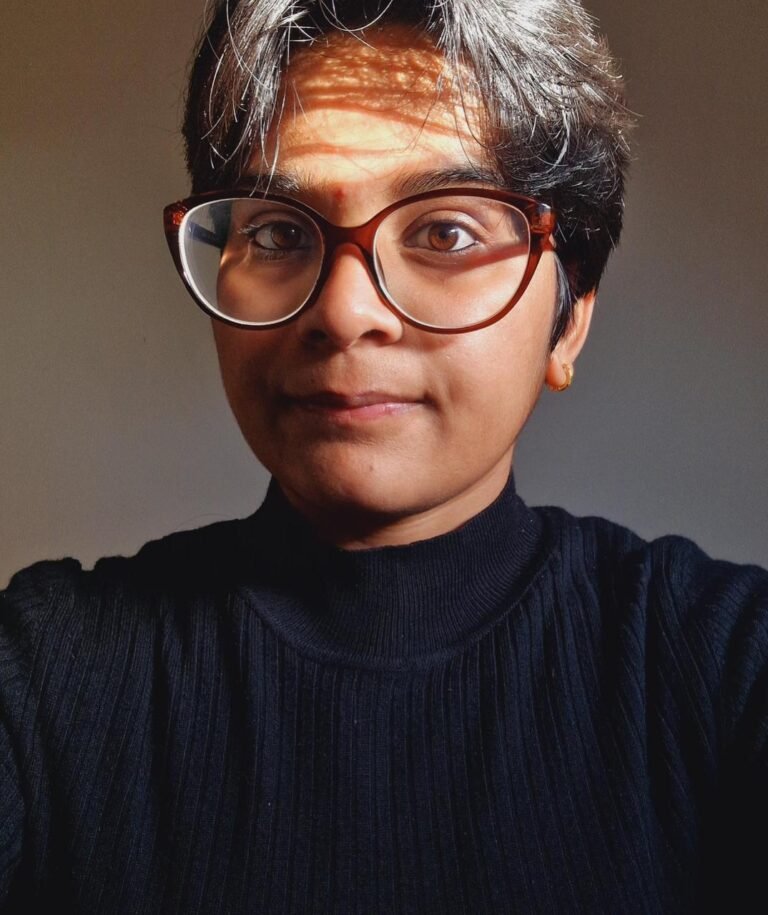
Sucheta Chaurasia
is a researcher and journalist with The Secularist. Previously, she has worked with print and digital news platforms in India and the UK, telling multimedia stories of human interests, community journalism, climate change, and socio-cultural politics.

