
There is something comforting about the word ‘ceasefire’.
It sounds cinematic and almost conclusive. We picture guns falling silent, the dust settling, and the declaration that the war is over. But in reality, the war is just a hiccup, like a hesitant pause, as if to say, “Let us continue the attacks after this snack break.”
Iran and the USA mutually agreed on a two-week ceasefire on the 8th of April, which officially should have ended on the 22nd of April. However, as events unfold, the ceasefire has been extended indefinitely by Trump. With negotiations via Pakistan underway, Trump remarked that he is waiting for a “unified proposal” from what he called the “seriously fractured” Iranian government.
The end of the war still seems like a distant reality. The following events took place in the last ten days, telling us just how sensitive things are in the West Asia conflict:
Iran submitted a 14-point response to the US proposal to end the war via Pakistani mediators. Key demands included resolving all issues and ending the war within 30 days, rather than the two-month ceasefire the USA proposed.
German Chancellor Friedrich Merz accused the USA of entering the war without a clear strategy, and said that, “The whole affair is ill-considered.”
The US pushed for a temporary truce – a 10-day ceasefire – on the Israel–Lebanon front
Israel carried out limited strikes in southern Lebanon in response to cross-border attacks, despite the ceasefire. So far, more than 2000 people have been killed, and millions have been displaced.
Proxy groups aligned with Iran remained active despite the ceasefire, keeping tensions alive.
This week, only 6-12 ships crossed the Strait of Hormuz, while over 100 ships crossed the Strait daily before the war. That is a drop of nearly 90%.
The World Food Programme has warned that food prices in Gaza are 85% higher than before the Iran war began since the global food supply chains are disrupted by the Hormuz disruption.
There is now a “dual blockade”: Iran is blocking and charging tolls of over $1 million per ship, while the US Navy has blocked Iranian ports from the other end.
After weeks of escalation, strikes, threats, retaliations, and dead journalists, this ceasefire brings a sense of relief. Yet beneath this fragile calm lies a more uncomfortable truth: ceasefires do not resolve wars. They merely buy time for all parties to recalibrate and plan their next moves. In that sense, a ceasefire is as much a political tool as it is a military one.
What makes the current situation particularly unsettling is how little has actually changed since the war began. The underlying disputes driving the conflict remain firmly unresolved. The United States continues to pursue attacking Iran to pressure it into giving up its ambitions to emerge as a nuclear power. Iran’s strategic ambitions, including its regional influence and security posture, have not been fundamentally altered. If anything, the attacks have only emboldened Iran’s resolve to keep at it, further wounded by the loss of the former supreme leader, Ayatollah Ali Khamenei, and his main adviser, Ali Larijani, and more leaders of their regime.
Israel, for its part, still views Iran as a direct and existential threat, particularly in light of its regional alliances and military capabilities. None of these positions has softened in any meaningful way. If anything, they have hardened through confrontation.
This is precisely why the notion of a “dead end” in the war is misleading. What we are witnessing instead is something closer to a tense and unresolved “stalemate”. It is a strategic delay, rather than being incidental.
The peace negotiations in Pakistan, scheduled for the 27th of April, with United States envoys Steve Witkoff and Jared Kushner and Iranian Foreign Minister Abbas Araghchi in attendance, had been called off! That is one step forward and two steps back in the way of achieving a peaceful negotiation.
The existence of mistrust between the parties delays the end of the war. Iran’s Islamic Revolutionary Guard Corps (IRGC) has offered a fresh proposal to the USA to keep the Strait of Hormuz open and remove the naval blockade by the USA. Only after clearing the Strait of Hormuz would Iran be up for further nuclear negotiations. At the same time, Trump wants Iran to halt its uranium enrichment for at least 10 years and relocate its nuclear stations abroad.
Durable peace requires not only the absence of violence but also the presence of credible guarantees. In the current scenario, such trust is conspicuously absent. Each side continues to interpret the other’s actions through a lens of suspicion.
Iran’s Foreign Minister Abbas Araqchi initiated meetings in St Petersburg with Russian officials and blamed Trump for the failed nuclear talks in Pakistan. Russia extended its support to Iran and offered to store Iran’s enriched uranium as a way of defusing tensions, an offer the United States has not taken up.
Iran’s offensive stance on the violent attacks has definitely made the two most powerful nations of the world – the USA and Israel – unable to win the war. No one is losing either. Hence, the ‘frozen conflict’ goes on.
All this is not to dismiss the value of a ceasefire and the attempt at reaching diplomatic negotiations. A reduction in violence, however temporary, matters. Lives are spared, infrastructure is preserved, the immediate risk of catastrophic escalation is lowered, and hope intensifies. And hope one must.
The war is in its ninth week now and seems far from coming to an end. If anything, the present moment demands a more sober assessment. As the parties struggle amidst a fragile ceasefire and keep delaying the nuclear talks, will the nations involved finally learn to trust one another and happily reach a democratic negotiation? Or is it just an intermission where the conflict is only catching its breath before it escalates further?
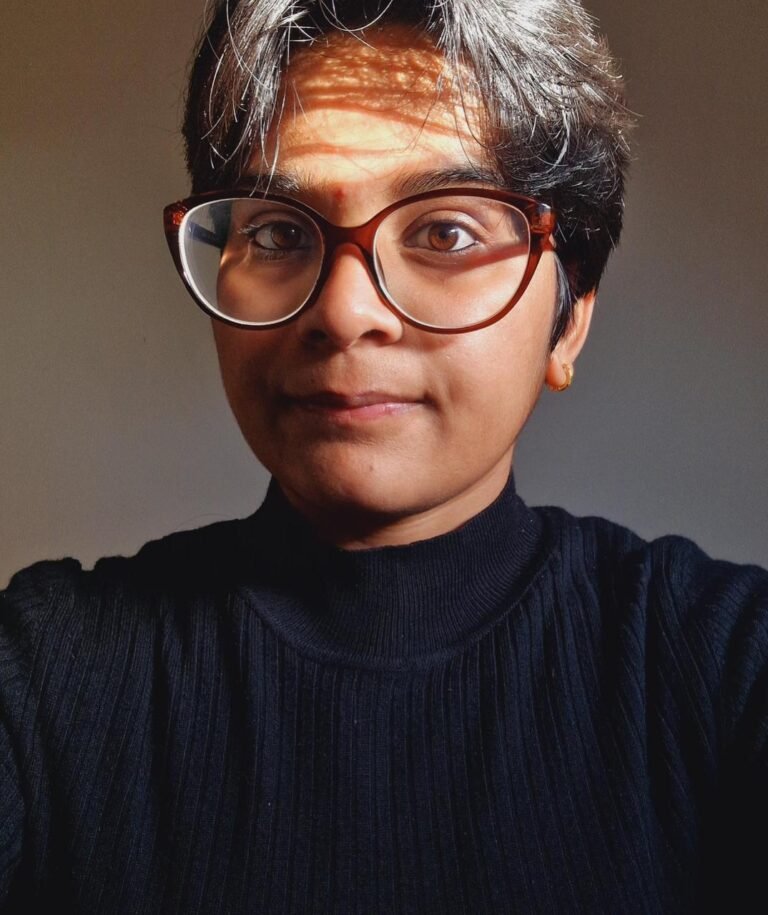
Sucheta Chaurasia
is a researcher and journalist with The Secularist. Previously, she has worked with print and digital news platforms in India and the UK, telling multimedia stories of human interests, community journalism, climate change, and socio-cultural politics.

