
The following essay by Teddy Mwaya is the winning entry for the essay-writing competition for youth – 2026, an international contest organised by the Secularist.
7.
That is the number of times my mother has asked me if I have a girlfriend this year. Seven hopeful interrogations over her favourite meal to prepare: ugali and sukuma wiki at our dining table. Each time she asks this question, it represents a needle stitching my throat a little bit tighter shut.
14.
That is the number of years Kenya could consume my life if I dared to speak the answer to Mum’s questions out loud. 1 This is a colonial-era sanction for a love that existed here long before colonial rule.
226.
That is the number of blackmail and extortion cases that have been reported by gay men in Kenya according to Ishtar in 20252. I still don’t know what number I will become. This is the mathematics of my secret: a constant inventory of losses that add up to the unbecoming of a person.
I was fifteen when I first felt the ghost of myself. In high school during the Sports Day event, I was watching not the rugby ball, but the boy running with it, but I knew with absolute certainty that what I felt was not recognition but dread. I could not explain it, but ‘confusion’ and ‘an enemy of God’s design ‘, the words of the pastor in our church, rang in my head. Kenya consists of deeply spiritual people and politics that find footing in religious conviction. To be a gay young person here can mean living in a perpetual state of internal displacement.
I do not live in Kakuma Camp, where LGBTQI+ refugees are pleading to be relocated after suffering violent homophobic attacks; I am in a camp that is more intimate, built on a foundation of silence, room by room in the house where I grew up, in school, and in the church where I am told my very being is a devious lifestyle.
In the most silent of these rooms, my father opens the newspaper, and the echo of one Member of Parliament, Peter Kaluma’s proposed Family Protection Bill of 2023, a draft measure that would allow the death penalty for what it defines as “aggravated homosexuality, which sought to write the death penalty for aggravated homosexuality into our laws, haunts me. A UK government country-policy note describes the risks faced by people like me: “Homophobia and transphobia remain common, and LGBTQI people may experience discrimination, violence, verbal and sexual harassment, corrective rape and conversion therapy, extortion, and blackmail by community and family members.” 3. This reality is the architecture of my home.
The persecution is further digitised via online platforms. My generation lives in two worlds: the real Kenya and a virtual one, one where we try to form the fragile connections banned from our lives. But even online, we are hunted. Ishtar recorded 61 more blackmail cases in the first 2 months of 2026 alone, while the Kenya Human Rights Commission has documented about 2,100 cases of anti-LGBTQ+ violence between October 2023 and September 2024⁴.
A single screenshot, as evidence of my “crime”, can lead to eviction or job loss. I am not a story; I am data in a conflict I never declared. Behind every statistic is someone like me, trying not to become the next one.
My greatest act of rebellion is not a public march. When the house has drifted to sleep, I lock my bedroom door. I open a private browser to read the writings of Wainaina Binyavanga – a Kenyan gay rights activist. He taught me that secularism is not a rejection of God but a refusal to let one interpretation of God erase my existence. Secularism does not ask a believer to abandon their creed; it simply prevents a community’s private doctrines and beliefs from becoming a state-enforced law for everybody else. It guarantees freedom of conscience for religious people while ensuring that no faith holds a monopoly over civil rights.
When my father rustles the newspaper and says his goodnights, and my mother’s hopeful questions fade in the evening air, I retreat to the bathroom. Behind the closed door of the small white fluorescent cell, I apply a coat of translucent nail polish to my smallest toe with a painter’s precision; a mark on my body that no law can reach. As it dries, I look in the mirror, and for that one minute I am the most complete human being in Kenya. I have collected myself from all the locked rooms, grounded in the reality that I am; therefore, I have rights. This inventory of loss that I write here is not an invitation to pity but a call for solidarity.
The arithmetic of my secret is a preventable ledger of suffering that is powered by the idea that a sacred text can justify the dehumanisation of a young person for seeking love.
1. Section 162 of Kenya’s Penal Code penalises anyone who has carnal knowledge of any person against the order of nature or permits a male person to have carnal knowledge of them, making it a felony punishable by 14 years in prison. Aggravated circumstances can raise this to 21 years.
2. Ishtar MSM is a community-based organisation that advances the sexual health rights of gay, bisexual, and men who have sex with men (GBMSM) in Nairobi, Kenya.
Johnson S, “Prison Sentences for Pair Who Attacked Gay Men Hailed as Sign of Hope for Kenya’s LGBTQ+ Community” The Guardian (March 11, 2026) <https://www.theguardian.com/global-development/2026/mar/11/prison-sentences-attacked-gay-men-hope-kenya-lgbtq-community>
3. “Country Policy and Information Note: Sexual Orientation and Gender Identity and Expression, Kenya, February 2025 (Accessible)” (GOV.UK, July 27, 2026) <https://www.gov.uk/government/publications/kenya-country-policy-and-information-notes/country-policy-and-information-note-sexual-orientation-and-gender-identity-and-expression-kenya-february-2025-accessible>
4. Read the report here: https://khrc.or.ke/wp-content/uploads/2025/09/Lives-on-the-Line.pdf
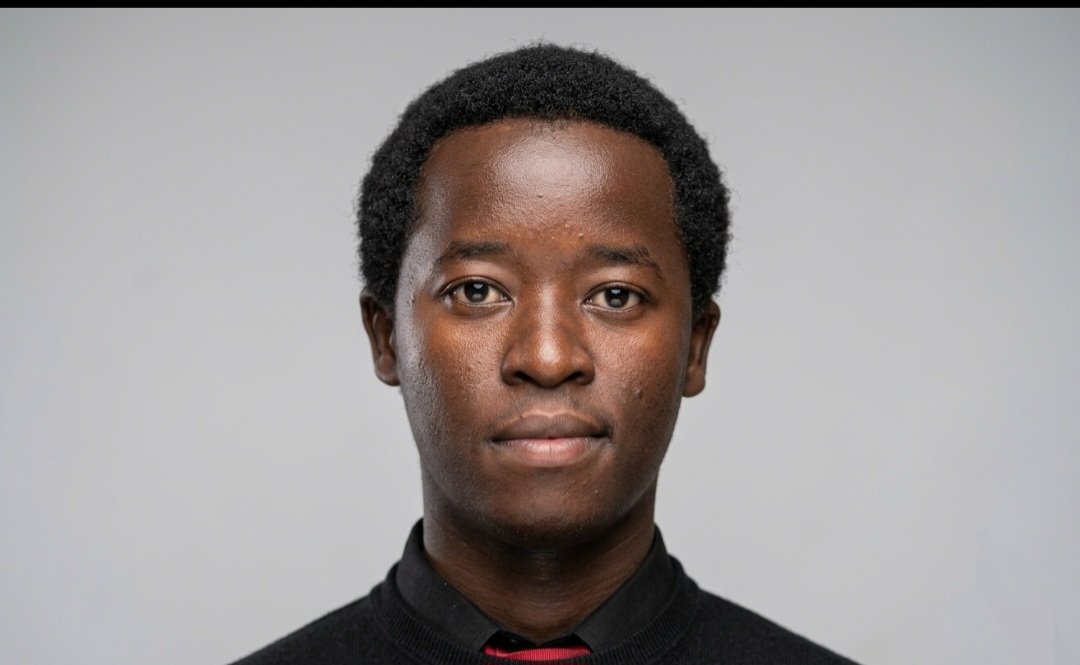
Teddy Mwaya
Teddy Munyao Mwaya is a Bachelor of Laws student at the University of Nairobi. He serves as an Editor-in-Chief for the Young Arbiters Society, where he specializes in Alternative Dispute Resolution. His research focuses on the intersections of emerging technology, data privacy, and fiscal policy. Teddy is an award-winning essayist in data protection governance and has published work on corporate AI liability, immersive mediation in the Metaverse, and illicit financial flows.

