
We need your support to keep the secularist going


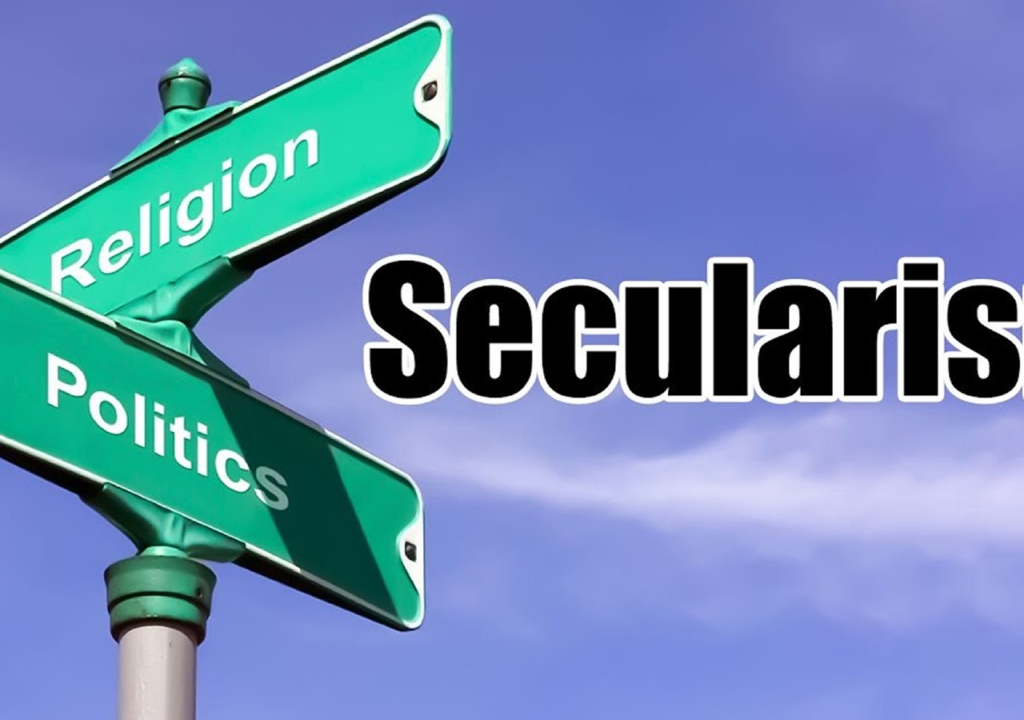
Founder’s Editorial
Secularism Is Not Neutral: A Discipline, a Way of Living
Ritu Mahendru, PhD
Founder and Editor-in-Chief, The Secularist
The founding editor of The Secularist, Ritu Mahendru, sets out a disciplined, human-centred understanding of secularism as essential to accountability, plurality, and justice.
I was born in India, migrated alone to the UK at twenty-one, and later earned a PhD in England. I have worked across journalism, academia, feminist organising, and international development, and now live and work from Uganda, leading a Global South–anchored research and advisory firm. Across these spaces, personal, institutional, and political, I have learned that power rarely announces itself plainly. More often, it presents itself as virtue, morality, or care for the collective good.
Power has always existed. What changes is how it justifies itself. One of its most enduring justifications is religion.
I have seen people commit profound harm, the systematic repression of women, sexual abuse, trafficking, organised crime, while publicly sheltering behind faith. Belief becomes a laundering mechanism: ‘sins’ are forgiven, authority restored, accountability deferred. Holding power to account, by contrast, requires reflection, doubt, and restraint, qualities power-hungry systems rarely cultivate.
I have witnessed this first-hand in India, during my work in Afghanistan, and now in Uganda. Religion is repeatedly mobilised to silence dissent, undermine individual autonomy, and weaken human rights protections. It is used to discipline women, erase LGBTQIA+ identities, and frame inequality as divinely ordained rather than politically produced.
This pattern is not anecdotal. It is structural.
Amartya Sen has shown how the elevation of singular religious identity above all other affiliations enables political simplification and legitimises exclusion, particularly in majoritarian contexts such as contemporary India (Sen, 2006; Jaffrelot, 2021). In Afghanistan, UN reporting and feminist scholarship document how the Taliban’s invocation of religion operates as a totalising system of governance, using divine authority to strip women and girls of education, work, and public presence with devastating psychological consequences, including widespread despair and suicide (Bennoune, 2017; UNAMA, 2022). In Uganda, the erosion of LGBTQIA+ rights has been driven not by popular consensus but by organised religious influence, with faith leaders actively shaping punitive legislation while framing exclusion as moral necessity (Human Rights Watch, 2023).
Across these contexts, religion does not simply coexist with power; it is instrumentalised by it.
What Secularism Is and Is Not
Before going further, clarity matters.
In its most universal, rights-based formulation, secularism refers to the obligation of the state and public institutions to maintain equal distance from all religions and belief systems, to protect both freedom of religion and freedom from religion, and to ensure that no belief system is permitted to override individual rights or democratic accountability. This understanding is embedded in international human rights law and has been articulated repeatedly by Karima Bennoune, former UN Special Rapporteur in the field of cultural rights (Bennoune, 2017).
Secularism is not atheism.
It is not hostility to belief.
It does not deny the legitimacy of faith in private life or community practice.
What it denies is moral immunity in public life.
Belief does not become illegitimate when it enters the public sphere, but it does become accountable.
Scholars have long debated different models of secularism. In India, Rajeev Bhargava’s concept of “principled distance” argues for context-sensitive engagement between state and religion. Others speak of “post-secular” societies, where religion re-enters public life in new forms. These debates matter. But what unites them is an unresolved question: how to prevent belief from becoming authority when it shapes law, policy, and everyday governance.
This is where neutrality fails.
Secularism as Discipline
Looking back, I realise I have always been secular in practice. As a child, belief was private to me; law and public life were not. At thirteen, I openly used the word periods in front of my Sikh relatives, an act that earned me the label badmash. It was an early lesson in how female bodies and speech are policed through moral authority.
What changed later was not my values, but my consciousness.
During my PhD, I became consciously secular. Living independently and doctoral research has a way of stripping comfort from assumptions. It demands sustained engagement with theory, evidence, and critique, including critique of one’s own inherited beliefs and social positioning (Delamont, Atkinson & Parry, 2004). I learned that culture, faith, and tradition are often invoked not to deepen understanding, but to foreclose inquiry.
Secularism, I came to understand, is not a backdrop. It is an intellectual discipline.
It requires:
- refusing moral shortcuts
- interrogating claims to inevitability
- holding oneself accountable, not just others
- accepting plural ways of living so long as no one is harmed
This discipline is precisely what authoritarian systems fear. The Taliban’s restriction of girls’ education is not only misogyny; it is fear of accountability. Knowledge destabilises moral monopoly.
Moral Certainty as a Mode of Power
One of the defining features of our time is the way power hides behind moral language. Decisions about gender, migration, development, belonging, and security are framed as ethical imperatives rather than political choices. Disagreement is recast as harm. Critique becomes betrayal. This dynamic cuts across ideologies. Religious conservatism claims divine authority. Nationalism claims cultural survival. Liberalism claims moral inevitability. Each presents its worldview not as a position to be argued for, but as a truth beyond contestation. Secularism disrupts this by asking a question power finds deeply inconvenient:
Who decides?
Who decides which values are universal and which are negotiable?
Who decides whose suffering counts as moral urgency?
Who decides when belief becomes authority?
These are not abstract questions. They determine whose rights are protected, and whose are postponed.
Feminist Dissent and Secular Discipline
Feminist traditions, particularly those emerging from racialised, migrant, and Global South contexts, have long understood what is at stake when secular principles erode. Feminist dissent is not a single organisation, but a tradition of critique that emerged in response to both patriarchal community control and state policies that prioritised “cultural harmony” over women’s safety (Wilson, 2007).
In the UK, Southall Black Sisters (SBS), founded in 1979, articulated this position with clarity and courage. I served on its management committee for nearly a decade and was also an active member of Women Against Fundamentalism. These spaces taught me that secularism is not an abstraction, it is a material protection.
Pragna Patel, a co-founder of SBS, gave this work a distinct political identity. Her writing exposed how minority women are routinely sacrificed at the altar of multicultural accommodation, forced to choose between cultural belonging and individual rights (Patel, 2011). Feminist secularism, in this tradition, insists that lived experience does not become immunity from critique.
Why Neutrality Is a Cop-Out
There is a comforting fiction that secularism means neutrality that one can stand above belief systems, adjudicating fairly from nowhere. This is neither possible nor desirable. Neutrality, in practice, often becomes a retreat from complexity. It flattens unequal realities. It excuses inaction in the face of harm. It allows power to proceed unchecked so long as it cloaks itself in culture or faith. The world is not black and white. It is shaped by history, inequality, gender, class, caste, and geography. Secularism does not deny this complexity, it insists we confront it honestly. Feminist secularism, in this tradition, insists that lived experience does not become immunity from critique. A striking example is found in the resistance to Iran’s compulsory hijab laws. Activists such as Vida Movahed, who publicly removed her headscarf in protest against enforced dress codes, and participants in the broader “Woman, Life, Freedom” movement have turned deeply personal experiences of religious coercion into public critique of a system that uses belief to police women’s bodies and constrain freedom
What The Secularist Is Committed To
I founded The Secularist because there is a growing absence of spaces that reward rigour over righteousness.
This is not a platform for outrage, nor a sanctuary for certainty. It is not interested in reassuring readers that they are already on the right side. It exists to create space for disciplined thinking in a climate that increasingly punishes it. We are interested in how power operates through belief, ideology, institutions, and silence. We welcome disagreement, provided it is argued honestly and without appeals to moral immunity.
Secularism is not an abstract ideal reserved for academic debate. It is a political necessity in societies marked by inequality, violence, and competing claims to truth. Where belief becomes authority, rights become conditional and dissent becomes dangerous.
In such contexts, appeals to neutrality are a convenient retreat. The Secularist refuses that retreat.
Not neutrality.
Not hostility.
But rigour grounded in lived realities, pluralism, and human consequence.
References
- Bennoune, K. (2017) Report of the Special Rapporteur in the field of cultural rights: Fundamentalism and extremism. United Nations Human Rights Council, A/HRC/34/56.
- Delamont, S., Atkinson, P. and Parry, O. (2004) Supervising the Doctorate: A Guide to Success. Maidenhead: Open University Press.
- Human Rights Watch (2023) Uganda: Anti-LGBT Law a Grave Assault on Rights. New York: Human Rights Watch.
- Jaffrelot, C. (2021) Modi’s India: Hindu Nationalism and the Rise of Ethnic Democracy. Princeton: Princeton University Press.
- Mahmood, S. (2005) Politics of Piety: The Islamic Revival and the Feminist Subject. Princeton: Princeton University Press.
- Modood, T. (2010) ‘Moderate Secularism and Multiculturalism’, The Political Quarterly, 81(1), pp. 4–14.
- Patel, P. (2011) ‘Multi-faithism and the Gender Question: Implications of Government Policy on the Struggle for Equality and Rights for Minority Women in the UK’, Feminist Legal Studies, 19(1), pp. 1–19.
- Sen, A. (2006) Identity and Violence: The Illusion of Destiny. London: Penguin.
- Southall Black Sisters (2020) Against the Grain: 40 Years of Struggle. London: Southall Black Sisters.
- UNAMA (2022) Human Rights in Afghanistan: Women and Girls. Kabul: United Nations Assistance Mission in Afghanistan.
- Wilson, A. (2007) ‘The Politics of Culture, Identity and Citizenship’, Feminist Review, 85(1), pp. 24–34