
We need your support to keep the secularist going


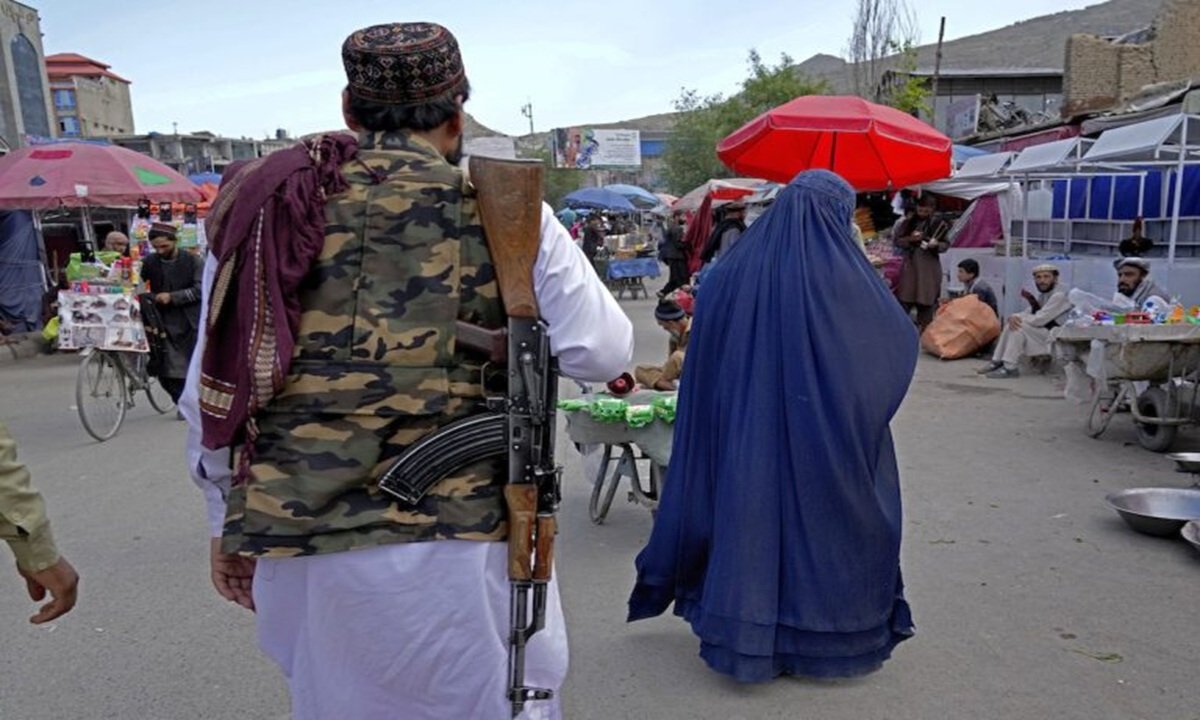
Since the Islamic Emirate of Afghanistan returned to power in 2021 under Taliban leadership, the situation for women in Afghanistan has deteriorated sharply. State-sanctioned discrimination has further eroded the already limited freedoms and autonomy of Afghan women, with new decrees systematically restricting their rights and legitimising increasingly severe forms of oppression.
In January 2026, the Taliban issued Decree No. 12, a set of comprehensive penal codes, introducing a range of legal sanctions. The decrees came to international attention only recently after it was leaked to the organisation Rawadari, which published the original document in Pashto. The Afghanistan Analysts Network subsequently translated the decree into English, making its contents accessible to a wider international audience.
Men can now physically abuse women so long as it does not result in “broken bones or open wounds”. Men are punished with only 15 days in prison for beating their wives, while they have the authority to punish their wives freely, even, for example, for visiting relatives without their husbands. There are even harsher punishments for people of lower social classes. Slavery is officially recognised. And yet these are only some of the many heinous provisions of the new penal code.
The draconian laws clearly lay bare the regime’s mindset that women are mere subjects to be controlled by men. Even cruelty towards animals bears a more severe punishment than instances of domestic violence.
“These policies are not isolated measures. They form an institutionalised system of gender discrimination that denies women and girls autonomy over their own bodies, health, and futures,” says Special Rapporteur on Afghanistan Richard Bennett in a UN press briefing in Geneva.
Under these regulations, healthcare for women has worsened. Women cannot avail emergency services without a male companion. A woman was left to deliver a child at the hospital gates by herself because she was unaccompanied; another lost her four-year-old boy because she could not take him to the hospital all alone.
With girls’ education now restricted to primary schooling, the pipeline of future female doctors, nurses, and midwives will shrink even further. This is not merely short-sighted, it is profoundly self-defeating. Under the Taliban’s own policy of strict gender segregation, where female patients are expected to be treated only by female health workers, the system simply cannot function if women are prevented from entering the medical profession. The result is a policy that makes no practical sense: it creates the very shortage of female medical staff that their own rules require. The inevitable consequence will be fewer trained professionals available to care for women and newborns, leading to preventable suffering, worsening health outcomes, and more deaths.
The consequences of these policies have alarmed human rights advocates across the world. Activists and international organisations have strongly condemned the decree, warning that it represents a serious violation of Afghanistan’s legal obligations under international law. Addressing the Human Rights Council in Geneva, U.N. High Commissioner for Human Rights, Volker Türk, stated that the decree “defines several crimes and punishments that contravene Afghanistan’s international legal obligations.”
While human rights activists across the world are lamenting the horrendous rules, the self-proclaimed upholders of Sharia law continue to defend it with all their might.
“The men have the right to rule completely over the women,” rights activist Mahbouba Seraj told CNN from Kabul. “His word is the word of law – that’s it.” The Taliban has repeatedly said that it respects women’s rights as long as they align with the interpretation of Islamic law.
Smriti Singh, Amnesty International’s South Asia Director, remarks, “Provisions on strict religious observance and the scaling of punishment depending on social class will entrench discrimination and target the country’s most marginalised and economically disadvantaged people.”
The debate over the Taliban’s gender discrimination is not only political or religious; it is also profoundly intellectual. At its core lies a contest over interpretation – who has the authority to define what Islam permits or prohibits.
Many feminist Islamic scholars have argued that the policies are not grounded in Islamic doctrine but in patriarchal power structures. They contend that denying girls and women the right to education has no basis in Islamic teachings and directly contradicts longstanding scholarly traditions within Islam that emphasise the pursuit of knowledge as a duty for both men and women.
“Unfortunately, misogynistic customs and practices have continued to propel the domination of men over girls and women, with the Taliban’s un-Islamic prohibition on girls’ education being one manifestation,” says Zainab Chaudry, a spokesperson and director of the Maryland office of the Council on American-Islamic Relations.
Furthermore, the Taliban’s claim that these restrictions are religiously mandated collapses relative to the wider Muslim world. In some Muslim countries, e.g., Indonesia, Malaysia, Turkey, Jordan, Morocco, and Bangladesh, women have the right to education and jobs. In Pakistan, Bangladesh, and Indonesia, women have served as heads of government. Those facts are testimony that the Taliban’s hardline state sanctions on women are being conducted more by misogyny and authoritarianism than any form of coherent religious doctrine. Therefore, not only do the Taliban’s strict laws on women contradict universal human rights standards, but they also go against the very religious framework they claim to represent.
Afghanistan’s women face a severe crisis and a worsening one. This isn’t a matter of personal policy but a systemwide dismantling of women’s rights and public participation. With all the surveillance, restrictions, and punitive decrees in place, women are being excluded from education, from work, and from civic participation – not just from opportunities, but from the very dignity of equality as part of a community.
In Afghanistan, what’s happening is gender apartheid: an elaborate machinery of exclusion and domination, dressed up with the rhetoric of religious legitimacy. For Afghan women, it’s not just a question of rights but also survival against these measures.
No such dehumanising systems can be ignored or allowed to stand alone. The international community needs, as it has ever done, to document these hard facts, amplify the voices of Afghan women, and urge strong measures.
Safeguarding Afghan women’s rights and dignity is not just a regional problem but a test of the world’s commitment to human rights, human justice and our combined moral responsibilities, now and for generations to come.
Silence is not neutrality here, right now – it is complicity.
Sucheta Chaurasia
is a researcher and journalist with The Secularist. Previously, she has worked with print and digital news platforms in India and the UK, telling multimedia stories of human interests, community journalism, climate change, and socio-cultural politics.