
We need your support to keep the secularist going


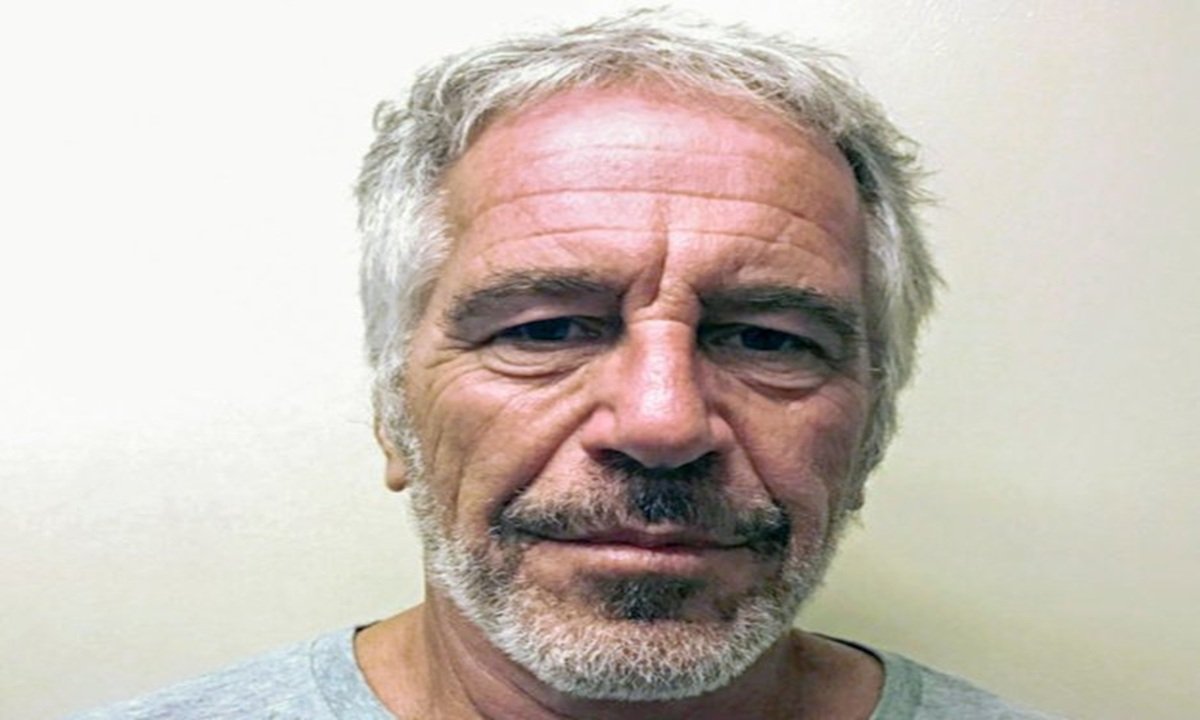
Survivors of sex trafficking offences similar to those committed by Jeffrey Epstein may be refused support under the UK’s modern slavery system due to immigration law changes introduced by the previous government, experts have warned.
Sara* was trafficked around the UK and sexually exploited in her teens and into adulthood, in the late 2010s and early 2020s. Over the years, she told openDemocracy, “different groups of perpetrators were involved at different time periods.”
When Sara was referred to the National Referral Mechanism (NRM) – the system designed to identify and support victims and survivors of modern slavery – the Home Office asked her to produce extensive evidence of her exploitation and take part in interviews totalling many hours.
Gathering the required information was challenging, Sara said, “as much of the abuse occurred in circumstances where I had little control, and there was limited documentation or tangible proof available to me.” She added that it “was extremely difficult to provide specific dates and timelines” for abuse that took place repeatedly over many years.
“There were also times when drugs and alcohol were involved as part of the exploitation, which has affected my memory of certain incidents. This has made it even harder to recall precise details, despite my efforts to cooperate fully.”
Sara’s experience comes after the 2022 Nationality and Borders Act, introduced by former Conservative home secretary Priti Patel, raised the evidence threshold for victims/survivors to get a “reasonable grounds” decision under the NRM.
Such a ruling recognises there are reasonable grounds to believe a person is at risk of modern slavery. It entitles them to some level of support, such as safe housing, counselling, advice and information, while they await a “conclusive grounds” decision that can lead to them being formally recognised as a victim by the UK government.
But decision-makers assessing at the reasonable grounds level can no longer rely on a victim/survivor’s personal testimony. Instead, they must “expect further evidence”, such as medical records or travel documents.
Those victims/survivors unable to produce the required evidence risk returning to exploitative situations. Some will later be referred back to the NRM, having experienced further harm.
“Every survivor of human trafficking should be met with support, not suspicion, when they come forward,” said Maya Esslemont, director of After Exploitation. “Yet, due to changes in UK law and guidance, survivors are being saddled with increasingly heavy evidence burdens which are often impossible to meet.
“In turn, the many survivors who are not officially ‘recognised’ as victims go without support from the Home Office’s fund for survivors. The impact of being disbelieved is not only practically harmful, it also damages recovery by confirming survivors’ worst fears around not being believed.”
The number of survivors receiving a positive reasonable grounds decision halved in the year after the Nationality and Borders Act was passed, falling from 84% to 55%. Last year, more than half of modern slavery survivors (5,448 people) were rejected at the reasonable grounds stage, including a third of adult and child survivors of sexual exploitation.
Justifying the policy change, the former government argued that a rise in referrals to the NRM showed that the modern slavery system was being ‘abused’ by bogus claims. The Office for Statistics Regulation later found there was no available data to suggest misuse.
For those who are recognised as victims at both reasonable and conclusive grounds stages, further advocacy is needed to secure access to support. “Even for the minority of survivors able to overcome all the hurdles needed to be recognised as a victim by the Home Office, the support is not guaranteed,” said Esslemont.
“Survivors still need to prove that support is ‘necessary’ to their recovery before they can access their right to basic support like counselling or safe housing. We know that a lower percentage of survivors are now accessing counselling compared to four years ago.”
Do survivors of traffickers like Epstein fit the framework?
As well as the increased evidence threshold, the government now requires decision-makers to use a framework – introduced in May 2024 – to consider “whether an individual is more or less likely to be a victim of human trafficking for the purpose of sexual exploitation”.
The framework says a person is more likely to be a victim if there were multiple sexual offences involving one or more offenders over an extended period; if there is “evidence of previous criminality by the perpetrator or other victims with the same perpetrator”; if there is evidence of grooming; and if the perpetrator has profited in some way from the abuse.
This rigid framework, campaigners argue, fails to grasp the complexities of the crime and puts more burden on the victims to provide evidence they may simply not have access to. It risks missing victims of abusers such as billionaire US financier Jeffrey Epstein, who trafficked and abused hundreds of girls and women with almost total impunity for decades.
Epstein’s victims, for example, may not have been able to identify the complex ways in which he profited from the abuse. Similarly, those he abused in the 1990s and early 2000s may have struggled to prove trafficking, as Epstein had no criminal convictions at the time (he later served a brief prison sentence in 2008 for soliciting a minor). Had the first victim who came forward to report Epstein in 1996 been subject to the Home Office’s current framework, she would likely have struggled to prove she had been a victim.
Grooming played a significant role in Epstein’s offending, but it is not present in every sex trafficking case, such as when victims have come to the UK legally for work, only to be sexually exploited. Traffickers use a range of tactics, including kidnapping and use of force, without necessarily relying on grooming.
“Modern slavery is a complex and often hidden phenomenon, which can take many different forms, with sometimes multiple forms of exploitation happening at once,” said Eleonora Fais, Anti-Trafficking Monitoring Group coordinator. “This is why clear definitions which are consistent with international frameworks are essential to support and strengthen identification efforts.
“When we frame forms of exploitation within very narrow criteria, like in the case of the sexual exploitation framework, this can create assumptions and stereotypes about what modern slavery should look like.
“This can limit professionals’ understanding of slavery and trafficking, and result in many people not being identified at all or being turned away from identification and support. Ultimately, this can lead to people remaining trapped in exploitation or being at risk of re-trafficking.”
A Home Office spokesperson said: “Modern slavery is a global scourge that abuses and exploits people for profit. We are committed to reviewing the modern slavery system to reduce opportunities for misuse of the system, whilst also ensuring that we have the right protections for those who need it.
“The proportion of positive decisions, both on Reasonable Grounds and Conclusive Grounds, has risen in the past year.”
This article is republished from Open Democracy under a Creative Commons license. Read the original article.