
We need your support to keep the secularist going


This story was originally published by The New Humanitarian.
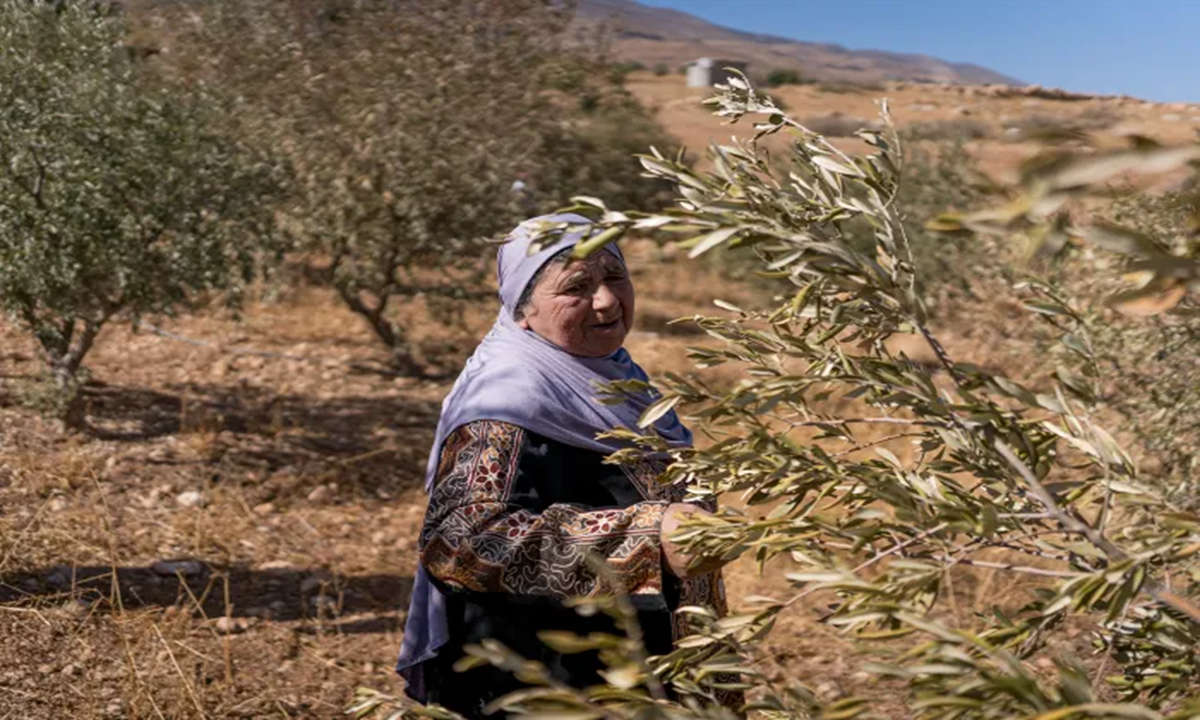
Every year on 30 March, Palestinians mark Yom al-Ard, Land Day. The phrase sounds almost harmless to those who have never lived inside its meaning, like a date for folklore, celebrating our roots, or perhaps honouring our sentimental attachment to olive trees and generationally inherited fields. But Land Day is not a charming ritual of heritage. It is a political wound. An annual acknowledgement of a truth that much of the world still tries to ignore, soften, or bury: In Palestine, our struggle has always been about the land. Simply, it is about our right to exist on our own land, and the violence that has been mobilised against us because of our refusal to disappear from it.
Land Day entered modern Palestinian history in 1976, when Israeli forces killed six Palestinians, who were citizens of the same state as the security forces who attacked them, and injured hundreds of others during protests against government plans to confiscate land from Palestinian villages in Galilee in order to “Jaduaize” the region.
For Palestinian people, intentionally fractured and segmented between different territories and legal regimes following the Nakba in 1948, the day came to represent a reunification of our shared national struggle against erasure and the structures of colonialism and violence at work throughout all of historical Palestine that made those killings – and so many others – inevitable.
Land Day entered modern Palestinian history in 1976, when Israeli forces killed six Palestinians, who were citizens of the same state as the security forces who attacked them, and injured hundreds of others during protests against government plans to confiscate land from Palestinian villages in Galilee in order to “Jaduaize” the region.
Understanding Land Day
Growing up in the Gaza Strip, I learned about Land Day before I fully understood what it meant. Like many Palestinian children, I marked it at school. We drew maps, memorised the names of villages that Palestinians were expelled from in 1948, and coloured olive trees, flags, and keys representing the ones refugees carried with them before they realised they would never be allowed to return home.
At that age, I knew Land Day mattered. I knew it had something to do with dignity, with Palestine, with the stubborn right to remain. But I did not yet know that land in Palestine was not a metaphor, not a backdrop to the story, or a poetic symbol to be admired from a safe distance. It was the reason the story existed at all. It was what people were being killed for.
That understanding arrived the way many political understandings arrive for Palestinians: not through theory first, but through violence.
As a Palestinian born in 2002, I lived through Israeli attack after Israeli attack in Gaza before the current genocide. Each assault viscerally taught me the lesson that school gave me in fragments. Each bombardment made Land Day more legible. Each destroyed street, each displaced family, each home turned into a memory clarified the meaning of the stories that had been passed down by grandparents and teachers.
I began to understand that the issue was never only military escalation, never only negotiations, never only the latest round of bloodshed that foreign reporters could summarise as if history had begun that morning. The issue was always this: Who has the right to remain on the land as a native, and who must be broken, expelled, fenced in, bombed, starved, or exiled until that right becomes unrecognisable?
Palestinians are said to have been “displaced”. Villages were “abandoned”. Populations “fled”. This is the grammar of historical laundering. Villages do not abandon themselves.
That is why language matters so much when it comes to Palestine, and why I am no longer interested in the false dignity of neutral phrasing. Too much respectable writing still treats the Nakba as though it were a sad migration, an unfortunate side-effect of war, a regrettable demographic rearrangement produced by chaos.
Palestinians are said to have been “displaced”. Villages were “abandoned”. Populations “fled”. This is the grammar of historical laundering. Villages do not abandon themselves. People do not become refugees because a sentence in the passive voice carried them across the border. Zionist militias attacked Palestinian towns and villages in 1948. They expelled civilians. They terrorised communities. They killed Palestinians and drove more than 700,000 from their homes.
Britain had already prepared the ground for this ethnic cleansing decades earlier, promising Palestine away in the Balfour Declaration in 1917 while reducing the indigenous majority to “non-Jewish communities”, not a people with political rights of their own. That was not an omission on paper alone. It was the beginning of a long colonial syntax in which Palestinians could be present physically yet erased politically.
Architecture of forgetting
The violence of 1948 was not only expulsion. It was massacres. It was executions. It was burials and erasure. The coastal village of Tantura, south of Haifa, is one of the places where the land itself still accuses.
In May 1948, the Zionist Alexandroni Brigade occupied the Palestinian village. Survivor testimony, Israeli testimony, historical research, and Forensic Architecture’s 2023 investigation all point to killings there, including executions after the village’s occupation and the presence of mass graves. One of those grave sites, Forensic Architecture found, lies beneath what is now the parking area at Dor Beach.
A beach. A parking lot. Leisure and asphalt built over Palestinian bodies. This is not an invention of Palestinian grief. It is documented in research commissioned by the Israeli human rights organisation Adalah and reported internationally.
The point is not only the horror of one massacre, though that horror is enough. The point is the method: kill, expel, bury, cover, rename, picnic, forget. Build the new landscape so confidently over the old crime that anyone who speaks of what lies beneath sounds radical merely for insisting that the dead remain there.
This is why Land Day must never be reduced to a nostalgic affirmation of belonging. It is an indictment of the colonial project that has treated Palestinian presence as a demographic inconvenience for more than a century. It is also a rebuke to the Western narrative that long protected that project by teaching audiences to feel history from the wrong angle.
The economy of complicity
For decades, Israel was framed by the West as fragile, embattled, civilised, and perpetually reactive. Palestinians were framed as excessive, dangerous, emotional, and backward;. When we were not demonised, we were sentimentalised as victims, mournable only when silent.
The result was a moral economy in which the coloniser’s fear was legible and the colonised person’s memory and lived experience was suspect. We were asked to moderate our vocabulary. If not, we were simply labelled as antisemitic, creating and perpetuating the falsehood that being anti-zionist and antisemitic are the same thing. Meanwhile, the violence against us remained immoderate in every conceivable way.
On the ground, Palestinians go on being killed, deprived of the basic necessities of life, blocked from returning to their homes, prevented from rebuilding, squeezed out, and denied a future.
That economy has not disappeared, but the genocide in Gaza has cracked it open. The International Court of Justice, in January 2024, recognised the rights of Palestinians in Gaza to be protected from acts of genocide and ordered provisional measures. Amnesty International concluded in December 2024 that Israel has committed genocide against Palestinians in Gaza. Then, after the so-called ceasefire, Amnesty warned again in November 2025 that the world must not confuse a reduction in the scale of attack with an end to the genocide itself.
That warning matters because the media, governments, and exhausted publics are always eager for closure. A ceasefire is announced. The front pages move on. Gaza is filed away as yesterday’s catastrophe. But on the ground, Palestinians go on being killed, deprived of the basic necessities of life, blocked from returning to their homes, prevented from rebuilding, squeezed out, and denied a future.
The machinery changes rhythm. It does not surrender its purpose.
Writing to remain
This is what I want you to understand on Land Day: The word “ceasefire” can become another instrument of erasure when it invites the world to imagine that the crime has paused long enough for moral attention to expire. Palestinians know better because our calendar is different.
We do not experience this as a sequence of separate crises – 1917, 1948, 1967, 1976, 2008, 2014, 2021, 2023, 2024, 2025, 2026 – neatly divided into teachable units. We experience it as a historical continuity of violence with changing uniforms and updated vocabularies. With loss and grief. The forms shift: declaration, mandate, militia, state, occupation, siege, settlement, airstrike, starvation, ceasefire, board of peace. But the governing principle remains brutally consistent: remove Palestinians from the land, or make life on the land so unlivable that removal begins to look like fate instead of policy.
As a student, I read the archives and see how empire drafted us out of political existence. As a journalist, I have documented what this policy does to flesh: the maimed child, the mother searching rubble, the father learning to count the dead by the absence of voices at dinner. As a writer, I know language can either expose power or conceal it.
As a citizen, I know that pretending not to see is one of the oldest forms of complicity. As a human being, I know there is something morally rotten in a world that still asks Palestinians to make our suffering more palatable before it can be believed. Why should a people being erased also have to edit their own testimony into a tone acceptable to those who looked away?
Land Day taught me this too. It taught me that writing can become a form of remaining. When exile fractures the body’s geography, language tries to hold the line. To write Palestine is not to indulge in memory. It is to refuse the colonial demand that Palestinians appear only as aftermath.
To write is to say that the village existed before it was renamed, that the grave remains beneath the parking lot, that the refugee is not a wandering abstraction but someone with a house behind her, that Gaza did not become a wound on 7 October 2023 and did not heal because diplomats found a useful phrase. Writing does not replace return. It does, however, resist the final victory that colonisation seeks – not only the theft of land, but the normalisation of forgetting.
Preventing amnesia
So on this Land Day, after 30 months of the ongoing genocide, I refuse the softened script. I refuse to speak as though Palestinians merely drifted out of history. I refuse the elegance of passivity.
Israel did not inherit an empty land and then find itself tragically trapped in conflict. Zionist militias and, later, the Israeli state built power through the dispossession of Palestinians. Britain helped authorise the premise. Western institutions helped sanitise its language. Israeli force has spent decades making Palestinian life precarious on Palestinian land. Today, after all the massacres, all the burials, all the erasures, all the lies, the world is once again being invited to move on because a ceasefire has created the appearance of an ending.
But Land Day exists precisely to prevent that kind of amnesia. It tells us that what is being fought over is not only territory, but memory, legitimacy, heritage, culture, and the right to say: we were here, we are here, and this is being done to us.
It reminds us that Palestinians have not been punished because we love death, as racists and propagandists have long implied. We are being punished because we insist on life where others decided we should not remain. We insist on naming the village, naming the killer, naming the grave, naming the homeland. We insist that the earth beneath Palestine is not an inert surface available for conquest but an archive of the living and the dead alike.
Land Day is not a sentimental ceremony. It is the annual acknowledgement of the crime scene. And until the others learn to read it that way, they will keep mistaking pauses for peace, rubble for closure, and Palestinian survival for the end of Palestinian suffering.
The New Humanitarian puts quality, independent journalism at the service of the millions of people affected by humanitarian crises around the world. Find out more at www.thenewhumanitarian.org.
