
Students set wood on fire as they protest against quotas in government jobs at Dhaka University in the capital on July 17, 2024. Bangladeshi students on July 17, mourned classmates killed in protests over civil service hiring rules, a day after the government ordered the indefinite closure of schools nationwide to restore order. | Photo Credit: AFP
Bangladesh students vowed on July 18 to continue nationwide protests against civil service hiring rules, rebuffing an olive branch from Prime Minister Sheikh Hasina who pledged justice for seven killed in the demonstrations.
Ms. Hasina’s government has ordered schools and universities to close indefinitely and stepped up efforts to contain weeks of rallies demanding equal access to public sector jobs.
Riot police have fired tear gas and rubber bullets to disperse crowds while protesters and students allied to the premier’s ruling Awami League have battled on the streets with bricks and bamboo rods.
Ms. Hasina condemned the “murder” of protesters in a televised address to the nation and vowed that those responsible will be punished regardless of their political affiliation.
But Students Against Discrimination, the main group behind this month’s rallies, said her words were insincere and urged supporters to press on.
“It did not reflect the murders and mayhem carried out by her party activists,” Asif Mahmud, one of the coordinators of the protests, told AFP.
The group called on Bangladeshis to observe a nationwide shutdown on July 18, by keeping shops closed and staying at home ahead of fresh protests planned for later in the day.
The call was widely observed in the capital Dhaka, with barely any vehicles seen on the city’s usually traffic-choked roads.
Dhaka residents reported widespread mobile internet outages on July 18, two days after internet providers cut off access to Facebook — the protest campaign’s key organising tool.
Police on July 18 announced the death of a seventh protester the previous evening, conceding that police weaponry had killed the 18-year-old.

AFP
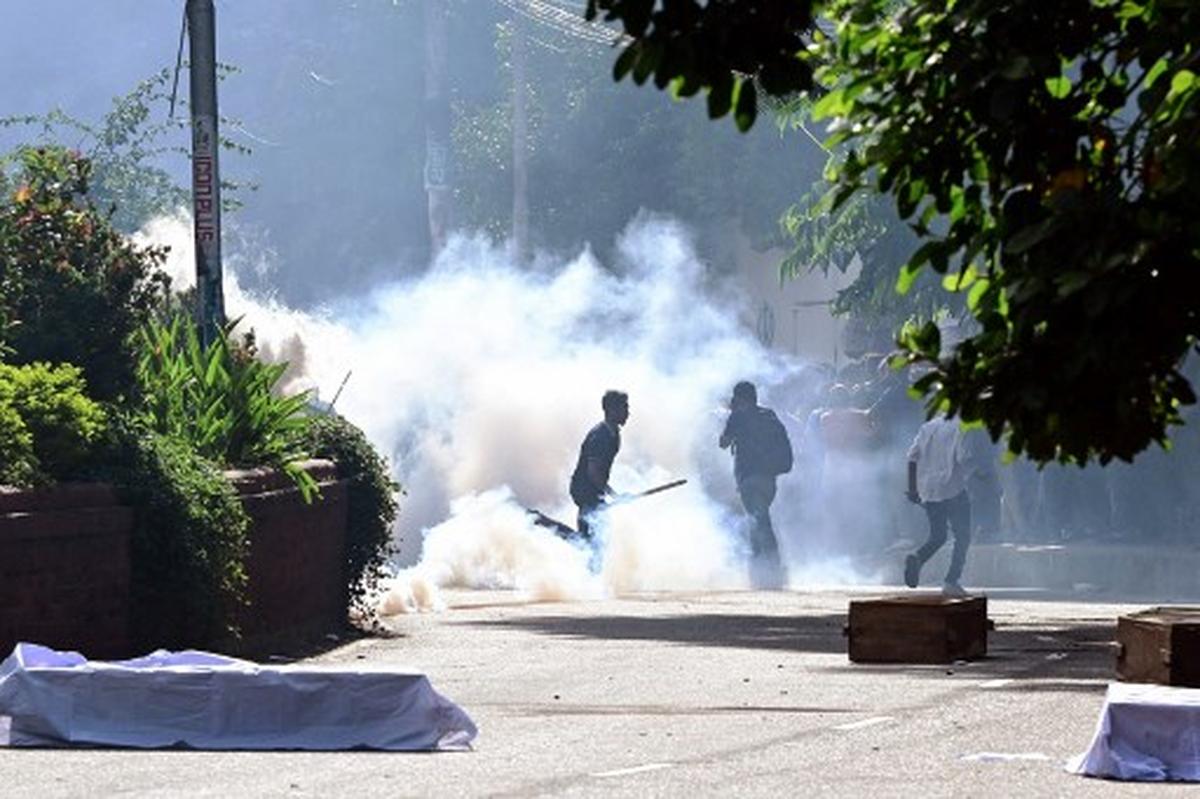
Bangladesh police personnel fire tear shells as students protest against quotas in government jobs alongside symbolic coffins of victims who died in a clash with the police, during their absentee funeral prayer ceremony at Dhaka University in the capital on July 17, 2024. Bangladeshi students on July 17, mourned classmates killed in protests over civil service hiring rules, a day after the government ordered the indefinite closure of schools nationwide to restore order. | Photo Credit: AFP
“He was hit by rubber bullets,” police inspector Bacchu Mia told AFP. “He was brought to the hospital but died before he was admitted.”
Hundreds injured
More than 500 others were injured in clashes around the country on July 17, while six people were killed on July 16.
Ms. Hasina’s speech did not assign responsibility for the deaths, but descriptions from hospital authorities and students given to AFP earlier suggest at least some of the victims died when police used supposedly non-lethal weapons on demonstrations.
Rights group Amnesty International said video evidence from clashes this week showed that Bangladeshi security forces had used unlawful force.
Fresh clashes overnight included a battle on Dhaka’s outskirts between police and more than 1,000 protesters who set fire to a roadside toll booth.
“We spent the whole night fending off attacks from the protesters,” deputy police commissioner Iqbal Hossain told AFP, adding that officers had eventually dispersed the group with rubber bullets and tear gas.
At the heart of the protests are demands to end of a quota system for lucrative government jobs that opponents say unfairly benefits members of Bangladesh’s ruling party.
 Source:
 Bangladesh police personnel fire tear shells as students protest against quotas in government jobs alongside symbolic coffins of victims who died in a clash with the police, during their absentee funeral prayer ceremony at Dhaka University in the capital on July 17, 2024. Bangladeshi students on July 17, mourned classmates killed in protests over civil service hiring rules, a day after the government ordered the indefinite closure of schools nationwide to restore order. | Photo Credit: AFP
“He was hit by rubber bullets,” police inspector Bacchu Mia told AFP. “He was brought to the hospital but died before he was admitted.”
Hundreds injured
More than 500 others were injured in clashes around the country on July 17, while six people were killed on July 16.
Ms. Hasina’s speech did not assign responsibility for the deaths, but descriptions from hospital authorities and students given to AFP earlier suggest at least some of the victims died when police used supposedly non-lethal weapons on demonstrations.
Rights group Amnesty International said video evidence from clashes this week showed that Bangladeshi security forces had used unlawful force.
Fresh clashes overnight included a battle on Dhaka’s outskirts between police and more than 1,000 protesters who set fire to a roadside toll booth.
“We spent the whole night fending off attacks from the protesters,” deputy police commissioner Iqbal Hossain told AFP, adding that officers had eventually dispersed the group with rubber bullets and tear gas.
At the heart of the protests are demands to end of a quota system for lucrative government jobs that opponents say unfairly benefits members of Bangladesh’s ruling party.

