
In Bijapur, Chhattisgarh, a district long scarred by insurgency, violence, and institutional collapse, a quiet but profound transformation is unfolding. For decades, poor infrastructure, geographic isolation, and structural inequalities deepened women’s vulnerabilities. The absence of roads, electricity, schools, healthcare, and safe water meant that women bore disproportionate burdens, walking miles for water, dropping out of education, and remaining excluded from markets and decision making spaces.
Such deprivation was not merely a developmental lag; it constituted a denial of the constitutional promise under Article 21, the Right to Life, which the Supreme Court has expansively interpreted to include the right to livelihood, clean water, shelter, health, sanitation, and the right to live with dignity.
The transformation in Bijapur today is not led by loud rallies or top-down mandates, but by women who are reassembling the pieces of broken communities through care, courage, and collective resolve. These women, once rendered invisible in the dual shadows of State and Maoist violence, are not just rebuilding their lives; they are steadily recasting their roles in society as learners, earners, educators, entrepreneurs, and leaders.
Basic Infrastructural Accessibility to Livelihood Generation: Women are Reclaiming Spaces
In recent years, development in Bijapur has not arrived in sweeping strokes but in subtle, scattered signs: electricity poles now dot the forest edges, mobile towers pierce the green canopy, and piped water trickles into homes that once depended entirely on rivers and streams. These infrastructural shifts, though delayed and uneven, are transforming the daily lives and aspirations of women, one day at a time.
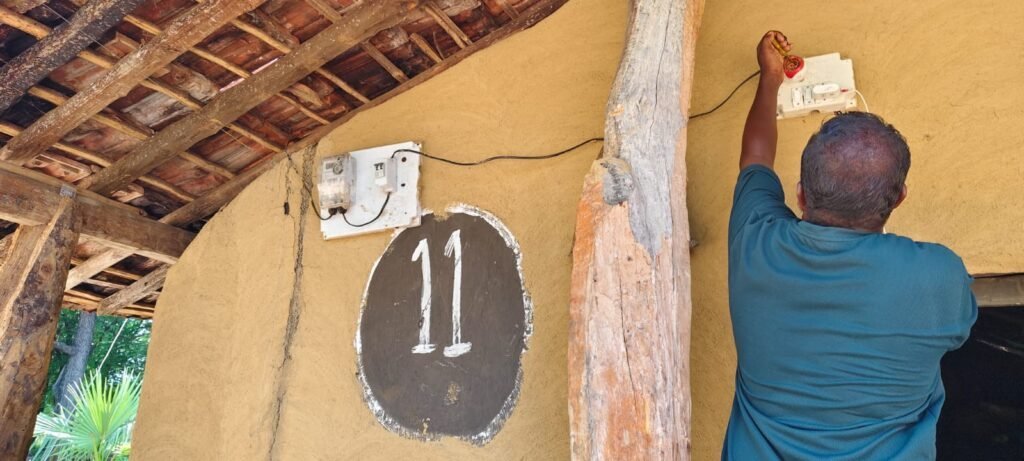
In Chutwahi village (the first village among 20 Niyad Nellanar villages that has received electricity for the first time since Independence), a young woman sits in her shaded courtyard. She sews blouses and petticoats for the women in her village. As she peels tora seeds with one hand while scrolling through her phone with the other, her words pour hope, as she says shyly
“We got a mobile tower recently. These days, I try to learn stitching online from YouTube videos.”
In regions long isolated by conflict and geography, technology is quietly redrawing the boundaries of possibility for women. A mobile tower is not merely infrastructure; it is access to skills, markets, information, and worlds previously unimaginable. Digital connectivity is allowing women to bypass traditional gatekeepers of knowledge and claim learning on their own terms.
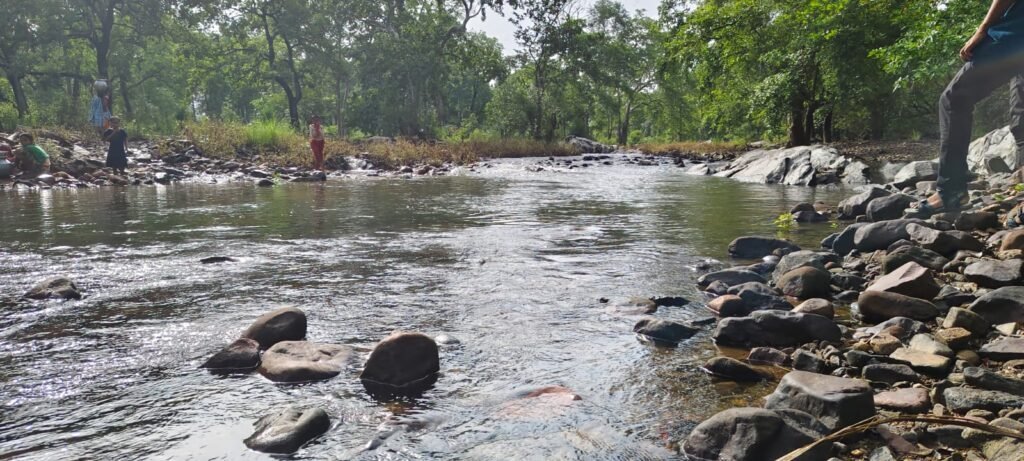
In Gunjaparti, 21-year-old Leela reflects on how the Har Ghar Jal Yojana changed her routines. Though tap water reaches her doorstep now, she still walks to the river each morning, which is 2.5 km away from her hut, a habit shaped by years of limited resources and neglect. Although she accepts that the District administration has provided safe drinking water, she still enjoys the water from the river, as ‘it tastes better’. With her arms full of mahua and tora, the forest’s seasonal gifts, she remarks:
“We’ve lived a certain way for so long. It’s good that things are changing, but it takes time to unlearn as well. At least I need not go down hunting for water bodies every day, traversing rugged terrain for 2-3 kms to fetch water for my domestic chores.”
Further into the interior village of Pundum, Geeta has emerged as a resolute pioneer. With access to Self Help Groups (SHG) loans and guidance from the National Rural Livelihood Mission (NRLM), she established the first kirana store ( a small corner shop) in her village, a notable achievement in a traditionally male-dominated space. From cold drinks to pulses, her shop harbours the various needs and wants of the villagers. She dreams of transforming her modest kitchen garden, once limited to gourds and tomatoes, into a source of nutritional security and local income. She says:
“I’m the only female earning in my household. Now I want to grow more vegetables, not just for my family, but to supply the whole village.”
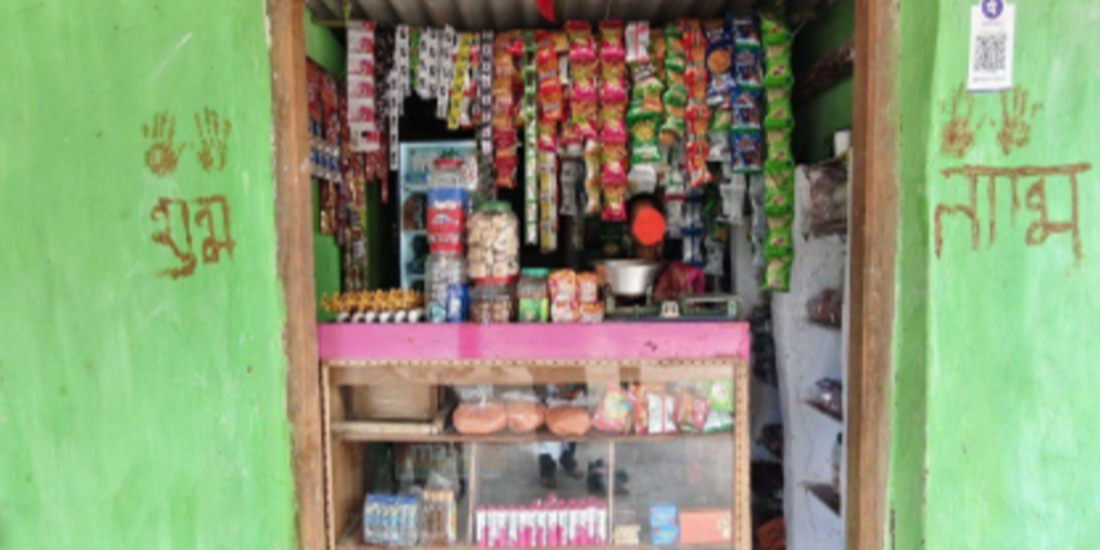
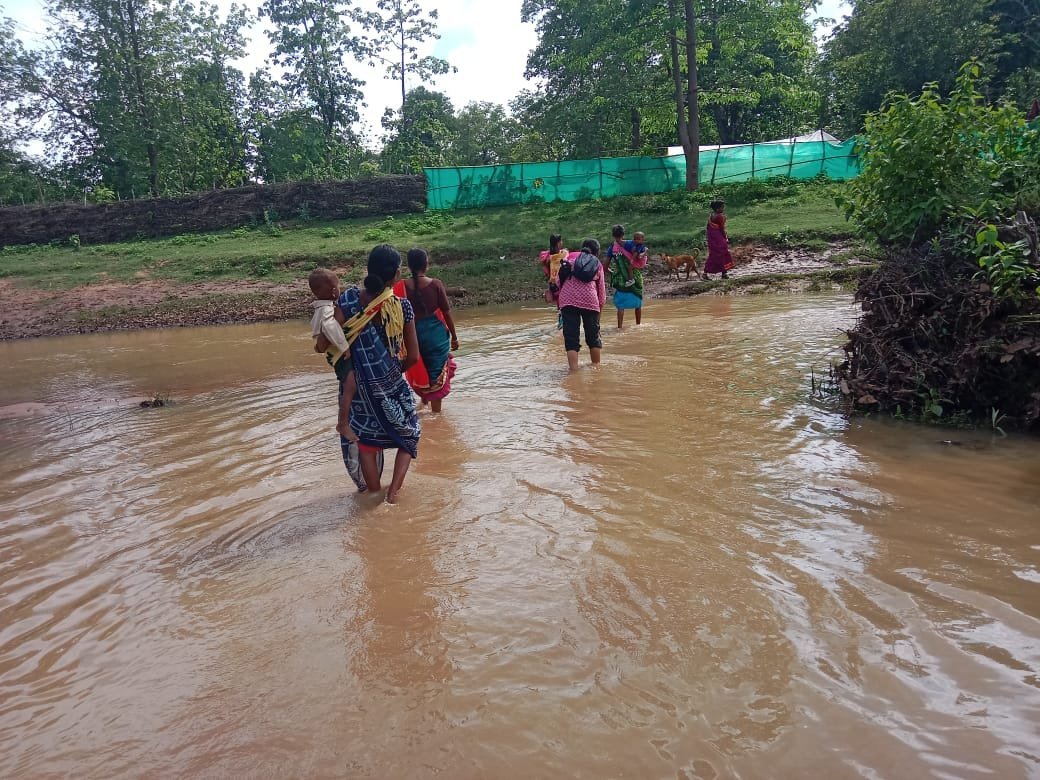
Each day, she crosses a river that rises to her knees, even after two days of scant rain, to attend the gram panchayat (Village Council) and SHG meetings, where she learns from other women. She says with a quiet smile.
“It’s not easy going barefoot for so long and crossing the river when it rains, but the support is there. You just have to keep showing up.”
Stitching Recovery: Rebuilding Hope for the Surrendered Naxal Cadres
At the Garment Factory, a skills programme designed for surrendered cadres, Alisha, now 22, is learning to stitch clothes and her life back together. She recalls:
“In the jungle, we had no schools, but it was there; our dadas (the Maoist leaders were contextually referred to as dada or elder brother) taught us to read and write. I learned the Hindi and English alphabets too. For the first time, I learnt to write my name!”
Alisha was taken into the Naxali Sanghathan (A Maoist group) at 15. She never sat in a formal classroom, but now dreams not only of completing her education but also of becoming a resource for girls in her village who, like her, were once denied access. She is quietly and radically redefining education, which is not merely a tool for state-led reintegration but a means of self-determination.
Additionally, many adult learners like her at the Naxal Rehabilitation Centre, under the Ullas adult literacy programme, are getting a second chance at learning. Here, women, many of whom left the jungle with no formal education, are being mentored by peer tutors who were once their comrades. These tutors, themselves former cadres who cleared their Class 12 exams, now guide others through foundational literacy, fostering not just knowledge but trust and solidarity. Education here is no longer a corrective measure; it is growing into a tool of healing and reclamation.
The revolution, however, doesn’t stop at livelihoods or learning. It is spilling into governance, where women are stepping into public life with new determination. They are no longer beneficiaries of schemes; rather, they are becoming architects of development and true agents of change.
At a recent Samadhan Shivir (Solution Camp), held for the gram panchayats of Itpal, Chinnakapali, Kandulnar, Mankeli, Santoshpur, and Borje, one figure stood out. A young woman, barely in her twenties, moved confidently between desks, answering questions, cradling her one-year-old child. She is the newly elected sarpanch of her village. Rejecting the widespread practice of sarpanch-patis, where husbands unofficially take over their wives’ elected responsibilities, Malti says:
“I know my work, and I understand that the work will require more than simply signing documents. I will do it all by myself. My husband supports me with the domestic chores so I can help make life better for the other women in our village,” she adds. Her words are not performative. They are purposeful.”
Across Bijapur, SHG members, Mitanins (Community Health Workers), Accredited Social Health Activists (ASHA), Shikshadoots (Messenger of Education), and elected representatives are asserting themselves in decision-making spaces. Geeta from Pundum, for instance, not only runs a business but also now attends gram sabha (village assembly) meetings, pushing for better water connectivity, market access, and fair pricing for her garden produce. She says,
“When I speak at meetings now, I don’t just speak for myself. I speak for all the women in my village. It’s a collective right that we are demanding.”
These women are transforming the very content of governance within this sensitive district. They bring priorities often missing in male-dominated spaces, like maternal healthcare, adolescent nutrition, menstrual hygiene, female school dropout rates, and rural employment for women. Their participation is not symbolic; it is substantive and thought-provoking.
Walking Each Other Home
Bijapur’s transformation demonstrates that when the State invests consistently in infrastructure, public services, and locally embedded institutions, even districts long marked by conflict can witness generational change. Electricity, mobile connectivity, water access, livelihood missions, literacy programmes, and accountable local governance are not isolated interventions; they form an ecosystem of dignity. For historically marginalised communities, especially women, such investments are not welfare; they are structural correctives. Sustainable peace in conflict-affected regions will not emerge from security operations alone, but from sustained development that expands capability, deepens trust, and redistributes opportunity. Bijapur’s women are showing that when the enabling environment strengthens, aspiration follows.
Lastly, in Bijapur, peace to date is still more than a word. It is a utopia that every being, especially women, in Bijapur is searching for. Possibly, it is stitched into every cloth Alisha sews, etched into every gram sabha demand Geeta makes, and whispered in every lullaby sung by Malti to her cooing baby during the village visits. It is women walking through rivers, both literal and metaphorical, and walking each other home into futures they now dare to imagine. Women who once were trapped in the vicious cycle of violence and violation of rights, today, walk with purpose; from insurgency’s ruins to the frontlines of leadership: one seed, one voice, one act of quiet rebellion at a time.
NOTE:
- Names have been changed to maintain anonymity.
- Images are the copyright of the author.

Sharbari Ghosh
Is a gender and public policy practitioner working at the intersection of feminist evaluation, governance, and conflict-affected contexts. She currently supports development planning in Bijapur, Chhattisgarh, an active insurgency zone, focusing on gender-responsive governance, women’s livelihoods, education, and access to justice. Her work spans India and the UK, including UN Women and UNICEF-supported programmes, and centres on feminist approaches to conflict, state accountability, and the everyday political economy of women’s survival and resistance.

