
We need your support to keep the secularist going


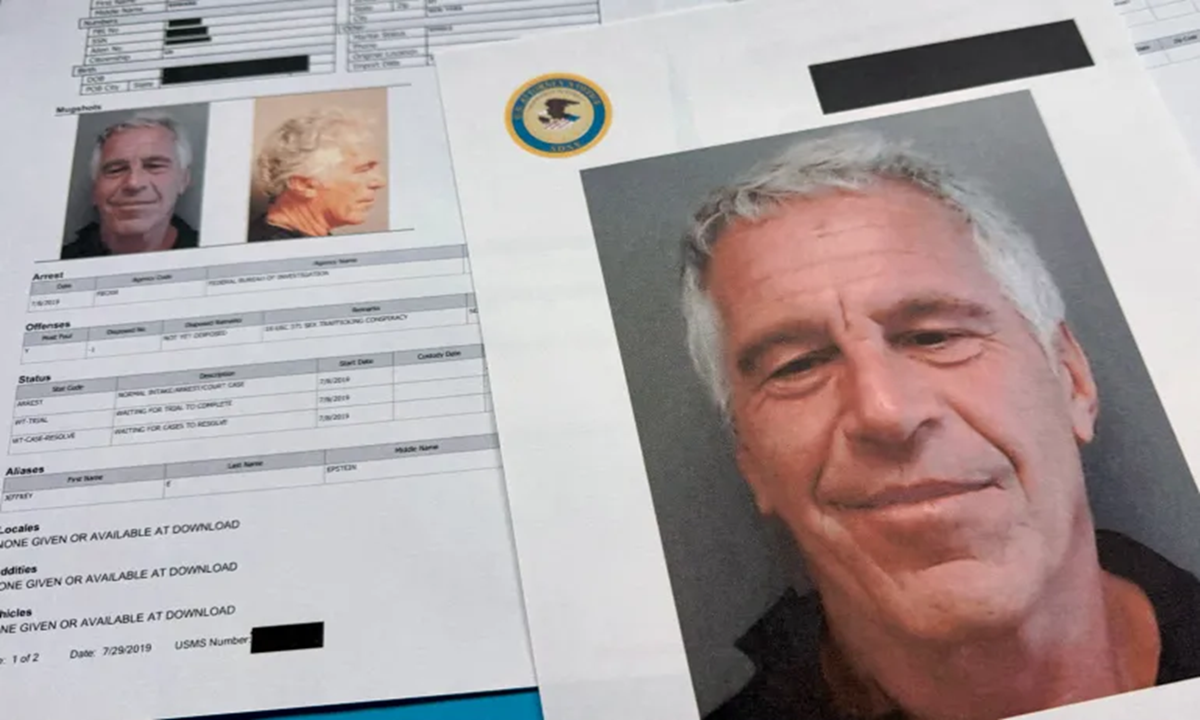
A disturbing revelation of the past few years has repeatedly been featured in news reports worldwide. It was not a geopolitical crisis, nor another economic dispute between competing powers. Instead, it was a scandal that cut through the moral frontiers of the world’s most powerful elites.
The name at its centre: the Epstein Files.
But even now, it seems the full scale of the scandal has not yet coalesced. After years of reporting, legal trials and witness account from survivors, new evidence makes it more likely than ever that what the public has witnessed may be a partial measure of the truth. If anything, the files have raised an even deeper question: not just, who participated, but how such a system could exist for decades in clear view.
The Epstein story is a story of more than just one man. It is the ecosystem that made him possible. From royals to politicians, billionaires to intellectuals, thousands of high-profile figures have emerged in association with Epstein’s network.
Many contest wrongdoing, claiming that appearing in documents does not mean misconduct. Legally, that is true.
Social and political, though, the size of the association has led to a more distressing question: how did proximity to a convicted sex offender somehow remain commonplace among elite circles for so long.
The scandal, which was once cast as a staggering ‘moral’ failure of a select few, increasingly begins to expose something more profound: a systematic and well-coordinated exploitation based on wealth, silence and access.
Only recently has attention shifted, though, to one of the most remote locations associated with the case: Zorro Ranch, a sprawling 7,600-acre property south of Santa Fe, New Mexico. Authorities reopened investigations into the property in March 2026 after investigative files were released that indicated the ranch was potentially a more crucial part of Epstein’s trafficking operation than had previously been believed.
Part of the tale gets told by the location itself. Isolated, private, and safely at arm’s length from the public eye, Zorro Ranch provided the ideal topography for secrecy. Power, you see, often works best outside witnesses’ prying eyes.
The new investigation has also reignited deeply troubling allegations about Epstein’s plans for the ranch. One account has it that Epstein wanted to leave a “genetic legacy” with multiple women and impregnate them in an attempt to spread his DNA. It’s a grotesque idea – one that smothers the line between megalomania and eugenic fantasy.
“What could have been done years ago is already being done, and we feel grateful the people of New Mexico, and survivors everywhere, are at last being heard,” a “truth” commission set up by New Mexico state lawmakers said in a recent release. “For years, this property has been a testament to unanswered questions. The present day marks a significant advance toward the transparency and accountability justice requires.”
However, accountability has long been the missing piece in the Epstein puzzle at the center of this puzzle. The Epstein case differs, of course, not with the wealth and clout of the perpetrators, but the systematic brutality of the abuse survivors described.
Testimonies keep showing how Epstein had targeted teenage girls, most between the ages of 14 and 17, enticing them with promises of cash, travel, modelling opportunities and financial assistance.
The offers weren’t mere luxuries to girls from poor or unstable backgrounds; they were lifelines.
That power imbalance became the architecture of the exploitation.
Among the most well-known accusers is Virginia Giuffre, who claimed Epstein trafficked her and other minors to powerful people, including then disgraced British royal Prince Andrew. She and other survivors said abuse there, including at places like Zorro Ranch, originated in the mid-1990s.
A survivor, named here “Jane” to protect her identity, said she was flown to the ranch at fourteen. She said she was ordered to give massages for Epstein and drawn into group meetings she would later describe as “orgies”.
Her story parallels the accounts of many other victims. Deals for modelling appointments. Financial support. Travel opportunities.
For teenagers dealing with poverty or unorganised families, these sorts of promises can look like opportunity. In fact, they were means of recruiting.
Predators rarely invent completely new systems. They are just exploiting the ones that already exist. Its case has also led to disturbing allegations that have not been resolved.
Among the millions of documents released by the U.S. Justice Department in January was a 2019 email sent to a local radio host claiming that “somewhere in the hills outside the Zorro Ranch, two foreign girls were buried on orders of Jeffrey and Madam G.” A former staff member at the ranch claims that it had been told (the charges are not backed up). Yet its existence serves as a reminder of another uncomfortable truth about the Epstein story: The probe gets beneath the surface, the more unanswered questions pop up. And questions that remain unanswered in fact are precisely what keep the scandal alive.
Survivor testimony has also indicated that the exploitation functioned through recruitment networks. Some victims say they were nudged or compelled by men to bring other girls into Epstein’s orbit – effectively turning victims into intermediaries.
It’s a well-worn tactic in trafficking chains: Develop dependence and grow the network via people already trapped within it. “Many of the survivors had experiences in New Mexico,” said Sigrid McCawley, an attorney who has represented hundreds of Epstein survivors. “And as we’ve found out, there were local politicians and other people that knew of what was going on in New Mexico.”
One of the most discreet forms of complicity is awareness without intervention. Epstein himself was not acting in a vacuum. Over the years he made connections with some of the world’s most powerful figures – business elites, academics, politicians, royalty. These relationships gave him something more precious than money: legitimacy. Prestige can be a kind of social armour.
Even after obtaining a 2008 conviction on charges of soliciting prostitution from a minor, he continued to be associated with powerful men. Some visited his homes. Others took his private jet. That remains one of the scandal’s main mysteries: how did a convicted offender stay part of the elite networks?
In the first example, this is a product of the intoxicating nature of power itself. It is said that Epstein believed very few would turn down luxury. Private jets. Exclusive parties.
Invitations to the inner circle. “Nobody turns down an invitation to fly private,” he supposedly commented. The comment was more diagnostic of elite culture than a joke.
Because the Epstein files expose something troubling about power structures: wealth doesn’t just buy privilege – it often buys tolerance. The scandal exposes a fundamental imbalance of power at its heart.
A billionaire financier flowed seamlessly through the world’s most powerful institutions and preyed on teenage girls who possessed few measures of social protection, scant access to justice, and sometimes little knowledge of the forces working in their lives.
Inequality allowed exploitation. It also established the conditions in which crimes could be hidden, sometimes quite literally, for decades. Which is why the Epstein files are so unsettling: Their depravity is not just the depravity of one person. Many criminals have been involved in history. The part that makes this case extraordinary is the ecosystem around him. Friends who didn’t ask questions. Institutions that looked away. Authorities who acted too late. The scandal is thus not merely of abuse. It’s a story of the fragility of accountability when it encounters wealth and power.
The world reverberated with the Epstein files not because they revealed a single dirty man, but because they demonstrated how malleable those systems are when it comes to slowing or restraining power. And how stealthily the vulnerable can vanish when doing so.

Sucheta Chaurasia
is a researcher and journalist with The Secularist. Previously, she has worked with print and digital news platforms in India and the UK, telling multimedia stories of human interests, community journalism, climate change, and socio-cultural politics.