
Earlier this year, in February, somewhere along a dusty stretch of road to Varanasi, India, Jay Maurya brought his cycle to a halt and began shouting slogans into the open air.
A woman stepped out of her mud house and asked, in Bhojpuri, a regional language, why a group of young men were cycling through her village, shouting about a government scheme.
Jay told her that the Mahatma Gandhi National Rural Employment Guarantee Act (MGNREGA), a cash-for-work programme that guaranteed every rural household the right to demand work from the state, was repealed in December 2025. In its place, the Viksit Bharat Guarantee for Rozgar and Ajeevika Mission Gramin (VB-G RAM G) Scheme had taken effect.
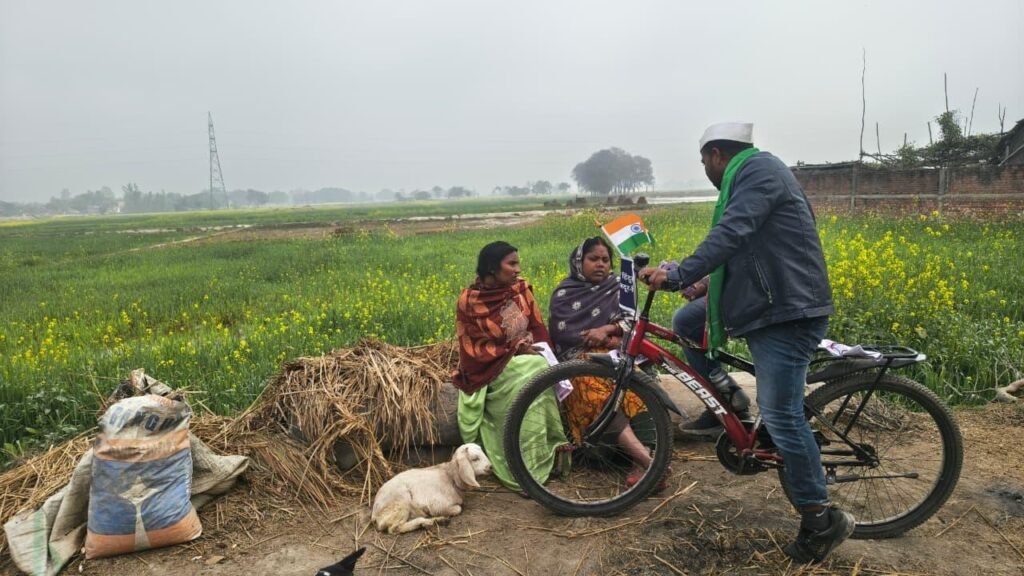
He went on to explain what the new law would mean for people like her. The woman went quiet.
Her brother had died, leaving behind a wife and three children. With no income and nowhere to turn, the widow found her way to MGNREGA, where she worked for six or seven months a year. The wages were small, but they were guaranteed by law and deposited into her bank account,
just enough to keep the household afloat. She had survived on MGNREGA until she could finally find her footing.
She told Jay that things had been different before 2014. Since then, wages had been delayed for months, work had become harder to find, and even the scheme that had once offered some solace had disappeared.
What Was MGNREGA?
The Mahatma Gandhi National Rural Employment Guarantee Act, passed in 2005 under the Congress-led UPA government, was one of the most significant pieces of social legislation passed anywhere in the world in the early 21st century. It guaranteed every rural household in India the legal right to demand up to 100 days of unskilled manual work per year. If the state failed to provide work within 15 days of a demand, it was legally obligated to pay an unemployment allowance. Workers could approach courts if these obligations were violated; some did, and won.
MGNREGA was not a welfare programme in the conventional sense. It was a legal right that people could actually fight for in court. It completely changed how the poorest rural workers dealt with the government, giving them real power for the first time.
In 2024-25, the scheme generated 286.18 crore person-days of work, supporting 5.78 crore households. More than half the beneficiaries were women. Scheduled Castes, India’s historically oppressed communities, formerly called “untouchables”, made up 18 per cent of beneficiaries. Scheduled Tribes, India’s indigenous Adivasi communities, made up another 18 per cent.
The scheme was particularly significant for women. For the first time in independent India, a government programme mandated equal wages for women and men for the same work. In Karnataka alone, 58 per cent of MGNREGA workers were women; more than their share of the state’s population. Nationally, women consistently accounted for more than 53 per cent of all person-days worked under the scheme between 2015 and 2022.
On December 18, 2025, Parliament repealed the Act.
What Replaced It
Parliament passed the VB-G RAM G Act, 2025, amidst three days of chaos in Parliament.
The government remarks that the VB-G RAM G is better than its predecessor. It promises 125 days of work instead of 100 and also claims improved transparency and AI-based fraud detection. Mahatma Gandhi’s name was removed from the scheme. The word “RAM” was added. The changes run deeper than the headline promises.
Shivraj Singh Chouhan, Rural Development Minister, while introducing the bill in the Lok Sabha, stated:
“The new legislation will lead to the comprehensive development of villages, be inclusive of socio-economically weaker communities, and uphold their dignity.”
But does it? While MGNREGA was a demand-driven legal right, VB-G RAM G is a centrally sponsored scheme operating at the executive’s discretion. The government can expand it, shrink it, or suspend it in any area without triggering any legal obligation to workers.
The funding structure has also shifted. Under MGNREGA, the central government bore approximately 90 per cent of wage costs. Under VB-G RAM G, states must now contribute 40 per cent of the wages. This matters because the states with the highest concentrations of Dalit, Adivasi, and poor rural workers, i.e., Bihar, Jharkhand, Odisha, Madhya Pradesh, and Uttar Pradesh, are also the states with the most constrained finances.
Chakradhar Buddha of LibTech India, a transparency organisation that tracks MGNREGA data, has calculated that providing 125 days of work to all active households would require a central allocation of at least Rs. 2.3 lakh crore (approximately $27 billion). The Union Budget 2026 allocated only Rs 95,692 crore, less than half of the funds needed.
Even this allocation is contingent on states contributing their 40 per cent share, approximately Rs 64,000 crore, without which the scheme cannot be fully operational. States like Jharkhand, which are already struggling to recover unpaid dues from MGNREGA, are unlikely to meet this burden.
As of 30 March 2026, reports from Bihar and Rajasthan confirm that MGNREGA work has stopped, while that of VB-G RAM G has not started. The law is three months old. The promised work does not exist at all.
The Communities Affected
On the Indo-Nepal border in the Balrampur district of Uttar Pradesh, the Tharu tribal community has lived along the forest edge for centuries. The Scheduled Tribe, India’s constitutional category for indigenous communities are entitled to special protections. Their villages sit at the end of unpaved roads. Floods disconnect them from the nearest town every monsoon. The men travel to work in brick kilns and construction sites in distant cities because there is no work locally. Some do not return.
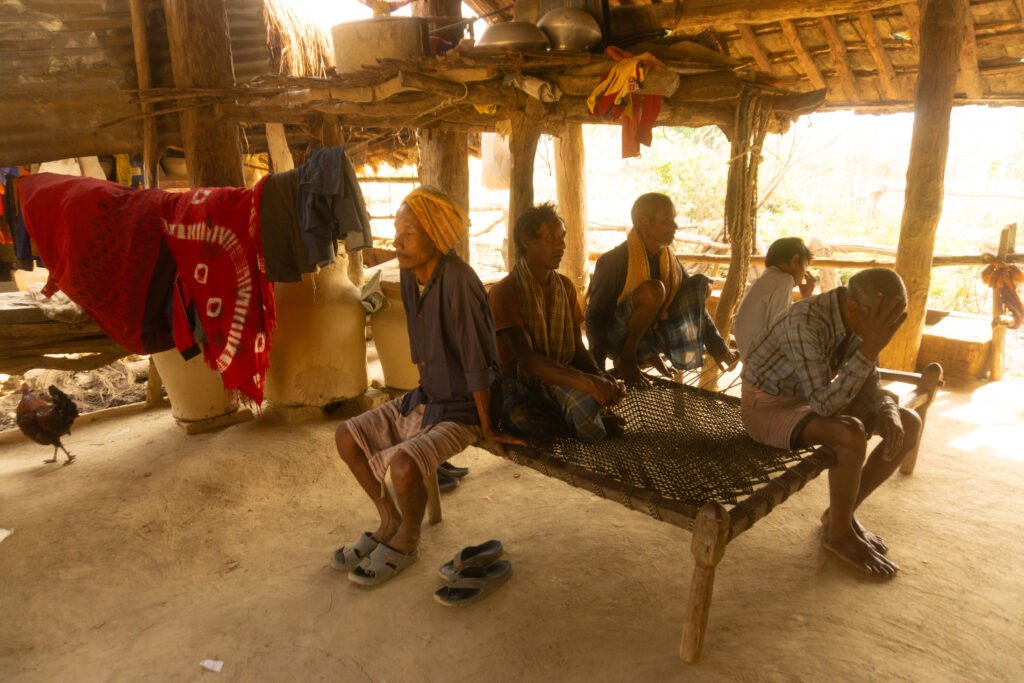
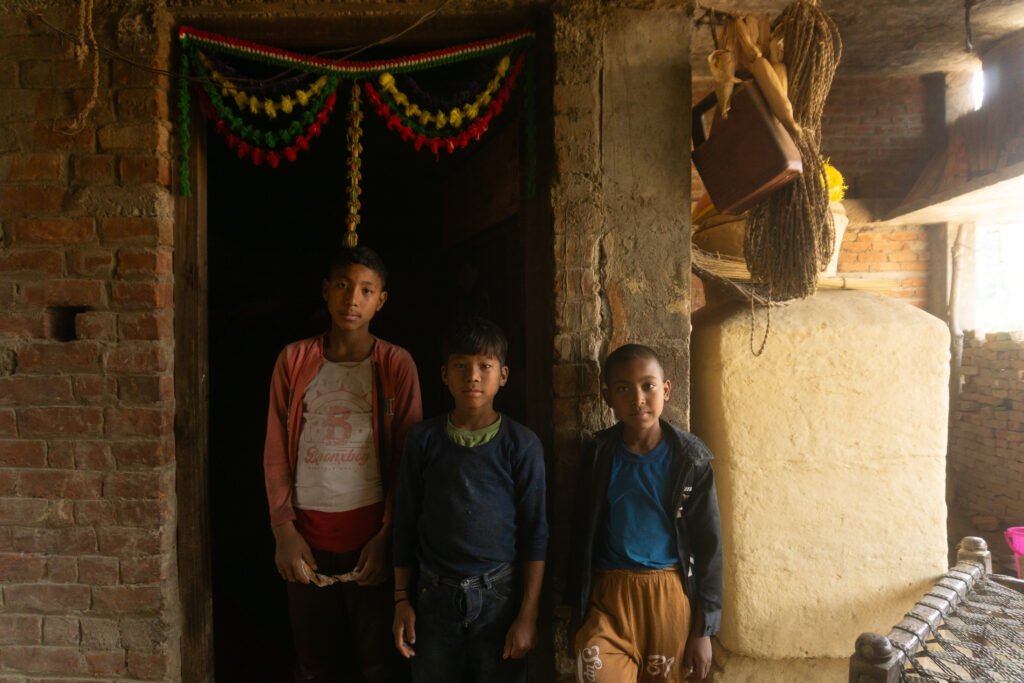
MGNREGA was one of the few schemes that actually reached this community. It did not require them to leave their village. It paid equal wages to women and men. It did not require the literacy or digital access that most government schemes now demand. It was work recorded in a government register, paid into a bank account in their name.
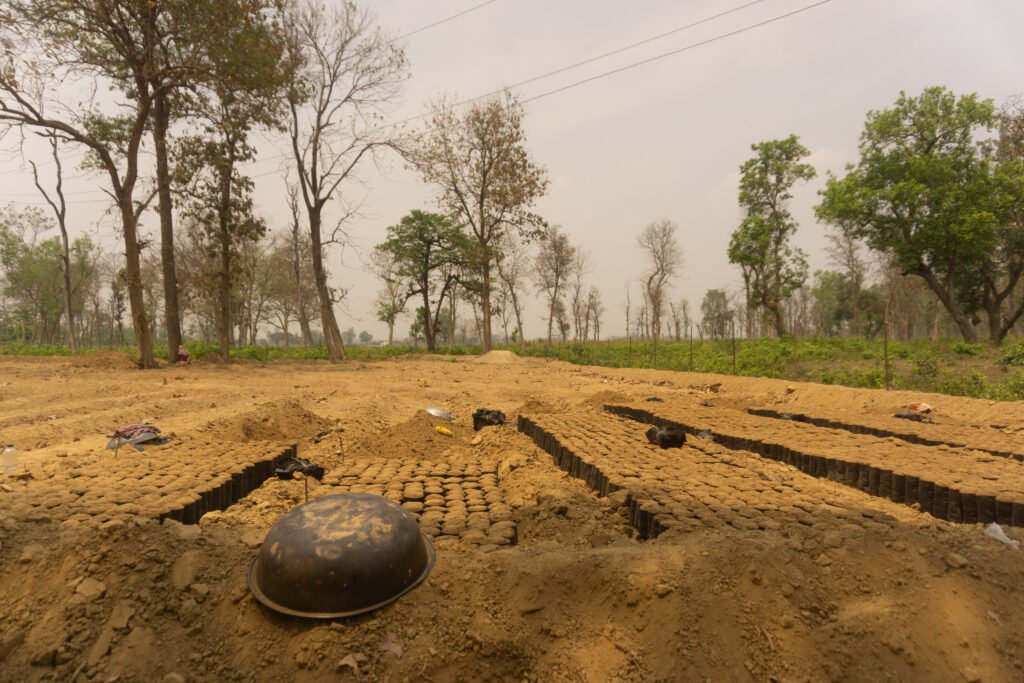
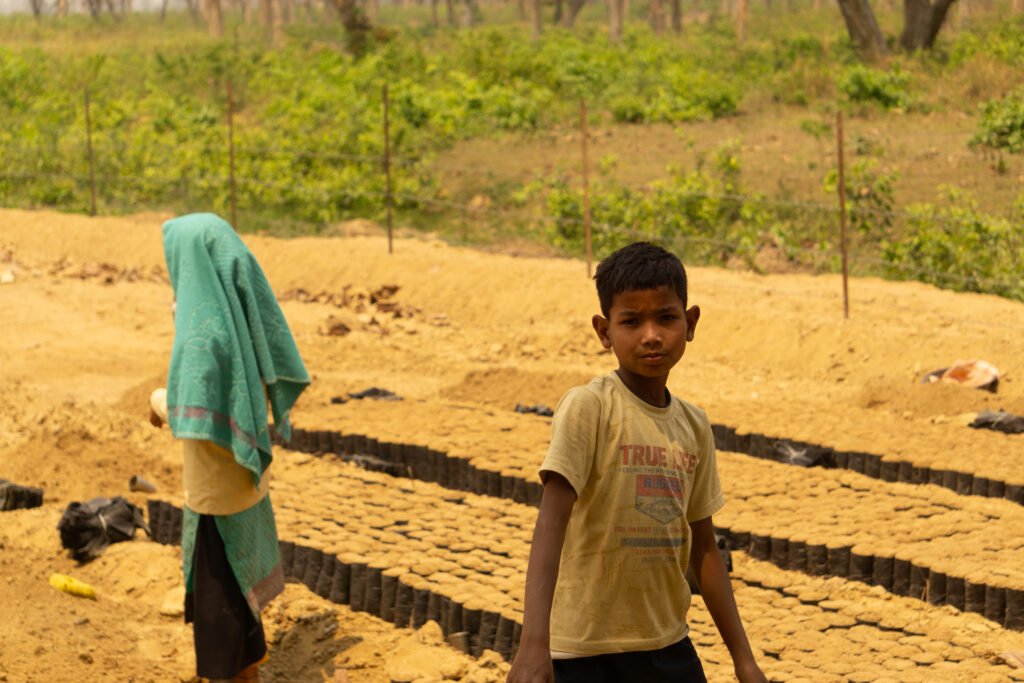
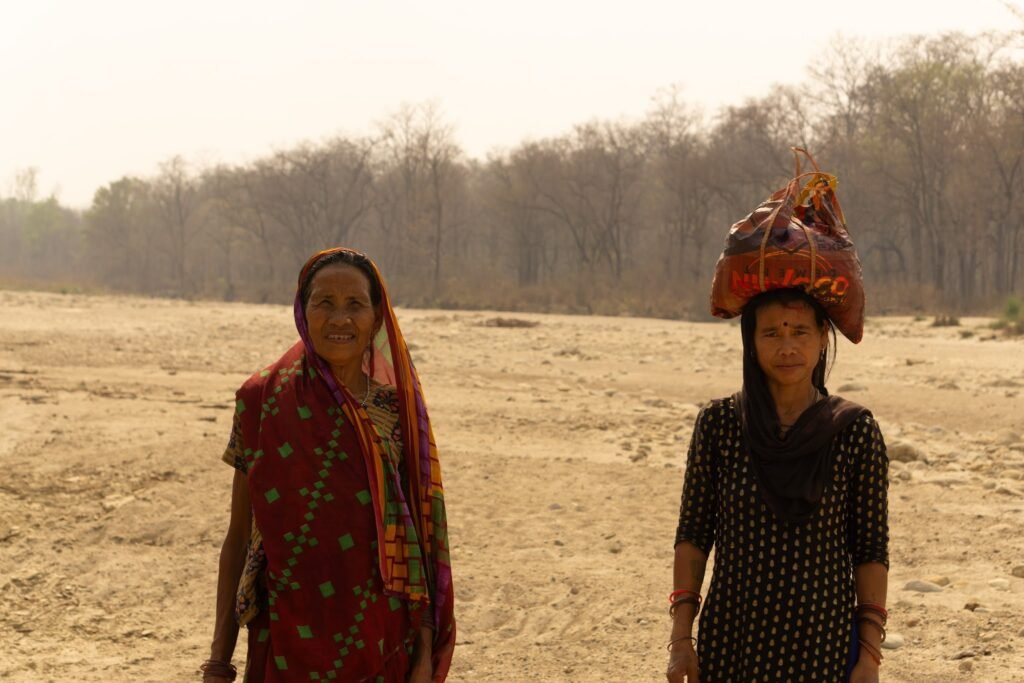
“We have land but no water for irrigation, no electricity, no roads,” says Shanti. “MGNREGA gave us some work to hold things together. But now all male members have gone outside for work and we are left alone with the children.” Every monsoon, floods cut their village off entirely.
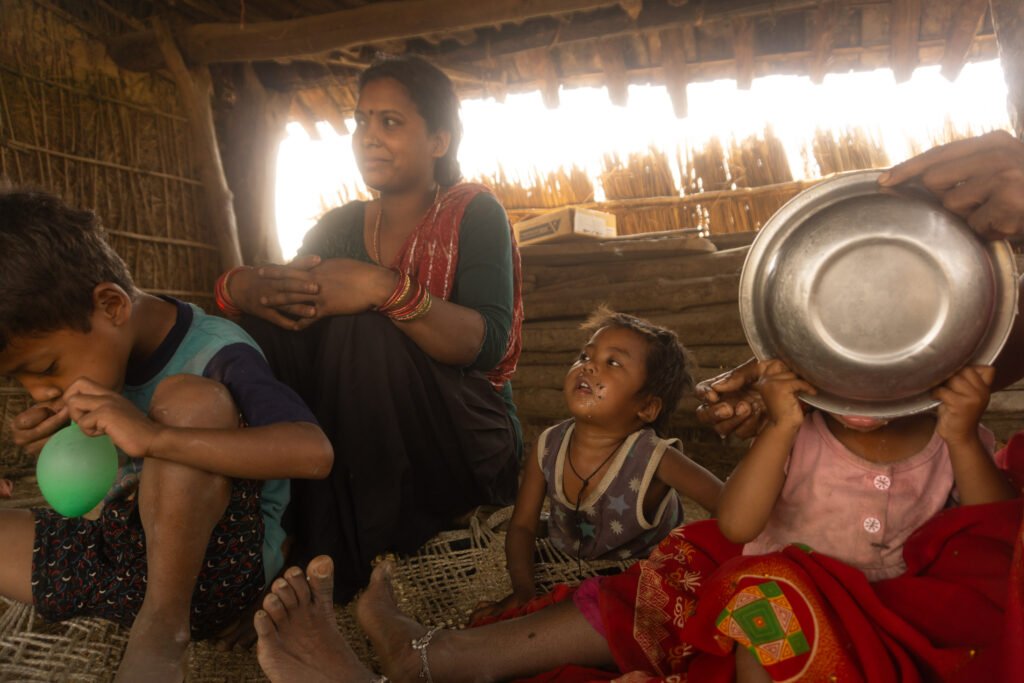
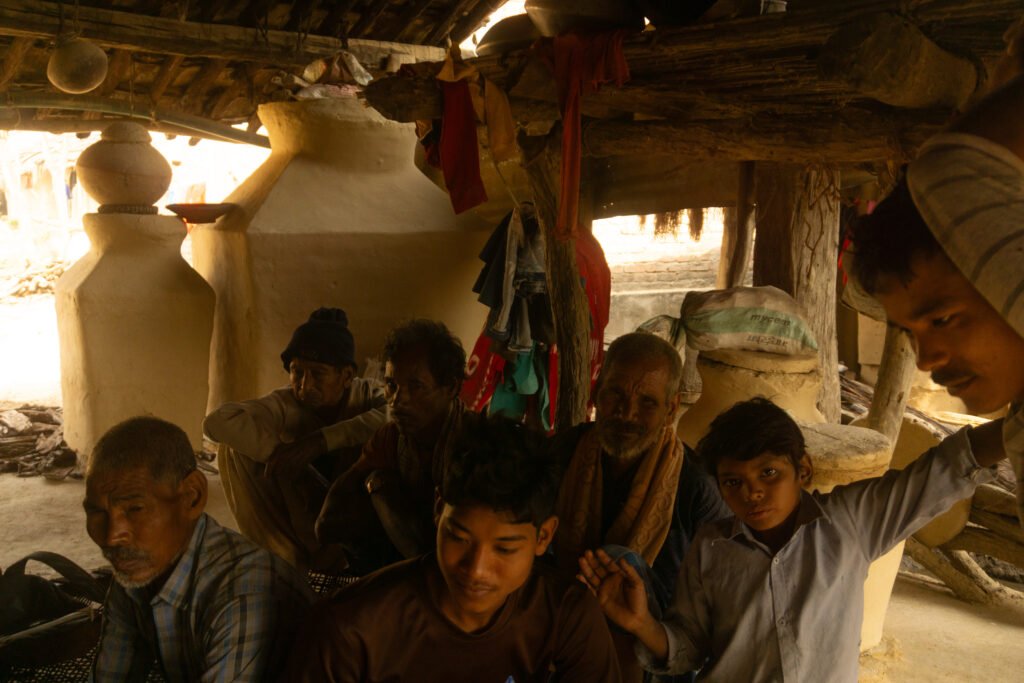
Economist Jean Drèze, who helped design the original MGNREGA, has described the new Act as replacing a rights-based entitlement with a scheme that operates at the discretion of the central government. For a Tharu woman in Balrampur, the difference between a legal right and government discretion is very real. The difference lies in the ability to demand work versus waiting to see if it arrives.
The Architecture of Exclusion
The repeal of MGNREGA did not happen overnight. For years before it was formally abolished, the government had been systematically narrowing its reach.
The most visible mechanism was the Aadhaar-linked biometric e-KYC verification system. Aadhaar is India’s national biometric identity system; workers were required to verify their identity through facial recognition before wages could be released. As of November 2025, nearly 69 per cent of all registered workers had not completed this verification, placing them at risk of being marked absent or denied wages.
More than 27 lakh workers were deleted from the rolls in a single month during the 2025 e-KYC drive.
In Tharu villages, where network connectivity is erratic and digital literacy is low, this requirement functioned as a wall. The government created conditions under which the most marginalised workers could not access the scheme, and then cited their absence as evidence that the scheme was no longer needed.
Rajendran Narayanan of Azim Premji University identified the contradiction in the government’s own data. The Economic Survey 2026 simultaneously claimed that participation in MGNREGA had improved due to administrative reforms and that dependence on the scheme had declined. Both were cited as justification for abolition. The survey did not mention that the government had been systematically under-approving state labour budget requests for years, converting a demand-driven right into a supply-capped programme long before it was formally replaced.
The Protests That Were Not Enough
Mallikarjun Kharge, Congress President, on 30 March 2026, posted on X/Twitter:
“The BJP has axed the right to work for millions of labourers by abolishing MGNREGA, and there is no trace of the scheme they hyped up so much.”
Between January 10 and February 25, 2026, the Congress party ran a nationwide MGNREGA Bachao Sangram, a campaign of protests, panchayat meetings, and gram sabha resolutions demanding the withdrawal of VB-G RAM G. Congress party workers were detained in Delhi. In Rajasthan, MLAs entered the state assembly’s budget session carrying agricultural tools.
Separately, a group of Gandhian youth began a cycle yatra, a journey on a bicycle, from Chauri-Chaura in Gorakhpur on 17 January; the site of a 1922 uprising against British colonial rule. They pedalled through Gorakhpur, Deoria, Ballia, Mau, and Ghazipur toward Varanasi, arriving on 14 February. Jay Maurya was one of them. Village by village, they stopped to document what workers were saying.
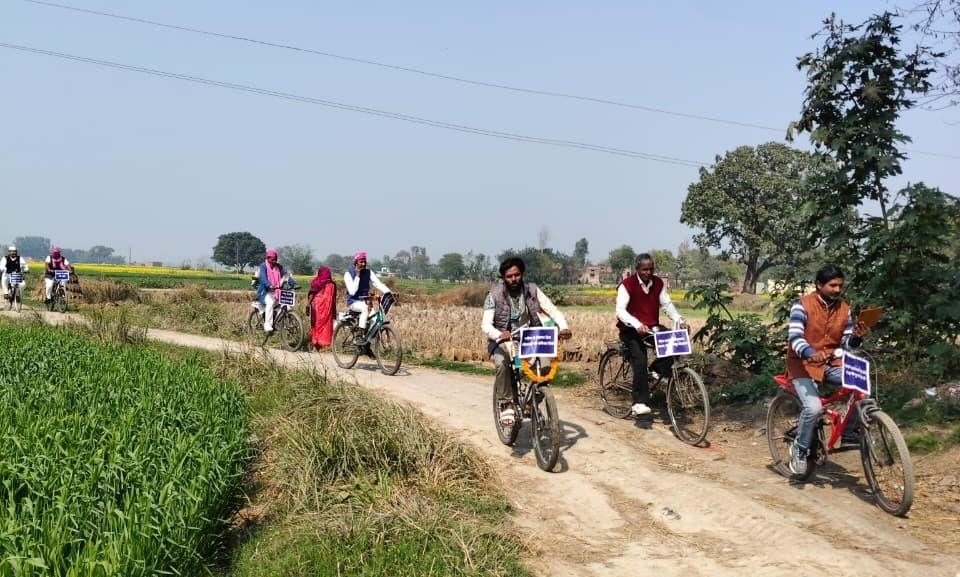
In the village of Belwa in Varanasi district, MGNREGA workers named Heeramani, Jeera, Kamala, Tara, and Manbhawati cooked food for the cyclists and spoke about what the scheme had meant to them and how they are not ready for the setback.
Five state assemblies, Karnataka, Kerala, Telangana, Punjab, and Jharkhand have passed formal resolutions against VB-G RAM G, calling on the central government to restore MGNREGA. Their formal legislative resistance has not changed the central government’s position; the VB-G RAM G Act remains in force, and MGNREGA stands repealed.
What Is Being Lost
B.R. Ambedkar, the architect of the Indian Constitution and the most important thinker of Dalit liberation, argued that caste was not merely a division of labour but a division of labourers; a hierarchy that assigned who would do what work, under what conditions, and with what ability to refuse. MGNREGA disrupted that hierarchy at the margins. It gave Dalit and Adivasi workers an alternative, somewhere else to go than what their ‘birth’ ordered.
The Wire’s analysis documented this directly: for landless workers, Dalits, Adivasis, and women, rising wages under MGNREGA meant fewer days of bondage and a greater ability to refuse exploitative conditions. What dominant-caste farmers described as a “labour shortage” was, in structural terms, labour becoming less submissive.
VB-G RAM G takes away the alternative from the marginalised communities. The new law also imposes a mandatory 60-day ban on work during peak agricultural seasons, removing the employment guarantee precisely when Dalit and Adivasi workers’ bargaining power would otherwise be highest.
Jay Maurya cycled into Varanasi on 14 February 2026, nearly a month after he had left Chauri-Chaura. Somewhere behind him, on a road he can no longer name, was the woman who had stepped out of her mud house when she heard the slogans.
Jay does not remember the name of her village. He remembers that she was very sad.
She asked him what would happen now. He had no answer. The law that had kept her bhabhi (sister-in-law) alive has been repealed. The law that replaced it has not yet been initiated. And in that gap, life continues quietly, without guarantee.
And in that gap between a right that could be demanded and a scheme that may or may not arrive, millions of rural workers now wait not for work, but for the state to decide whether they deserve it, filtered through caste and social hierarchy.

Ayush Sahani
is a photojournalist and reporter based in Kanpur, India. He has reported for Maktoob Media and The Indian Express.

