
Poriborton (change) has been the buzzword in Bengal in the recent assembly elections of 2026. And Poriborton did it witness. A rather huge and unprecedented one.
West Bengal has always prided itself as the land of intellectuals who boldly often quote, “What Bengal thinks today, India will think tomorrow.” From the Bengal Renaissance to the partition horrors, politics here was debated in coffee houses, classrooms, theatre groups, union halls, and ‘chai addas’ (tea stalls). Bengal nurtured a tradition in which ideology carried social prestige, and political debate became part of everyday identity.
The Communist Party of India (Marxist), CPI(M), governed West Bengal for 34 unbroken years, from 1977 to 2011, the longest-serving democratically elected communist government in the world. In the beginning, it was genuinely transformative. Operation Barga brought in land reform that gave share-croppers legal standing. Panchayati Raj was decentralised and made rural Bengal happy. The urban ‘bhadralok’ (well-mannered folks) found in Marxist politics a framework that aligned with their historical sense of cultural leadership, devoid of communalism and capitalism.
But power that long in one pair of hands loses its grip. Arrogance, bureaucracy, corruption and the ultimate land acquisition fiasco at Singur and Nandigram brought the downfall of the communist government. By 2011, even the most loyal Left voter had grown tired. Thus came the rise of All India Trinamool Congress, popularly known as TMC.
TMC has been led by Mamata Banerjee, who swept to power in 2011. The Left machinery was dismantled. Defending the rights of the farmers in Singur and Nandigram, she coined the phrase ‘Maa, Maati Manush’ (Mother, Motherland, and People) and was hailed as a child of the soil. The first few years of Trinamool rule carried genuine hope. She fought the Left for decades with a ferocity that seemed almost personal. She wore rubber slippers and drew cartoons. She looked like ‘one of us’ and was impossible to be ignored.
But Bengal has a long memory, and it also has short patience with betrayal.
What came to replace Left cadre culture was not its opposite. TMC mirrored CPI(M). It gatekept jobs and contracts, and the daily survival of the common people became a challenge. Employment dwindled. A state that once prided itself on producing engineers, doctors, writers, and thinkers was watching its young people board trains to Pune, Bengaluru, and Surat. The practice of cut money, wherein the local party workers skim a share of government scheme benefits, became so normalised that it entered common speech without shame.
Scandals and corruption under TMC found a safe haven, unlike women in the state.
Ankita Sahu, 30, an NGO worker in Kolkata, elaborated, “The Left indeed had done a lot for West Bengal, from land reforms to pushing for industrialisation, but somehow it did not cater to one major half of the population – the women. That was one major reason I think why Mamata came into power, but again, her short-term vision, corruption, immense violence, and lack of public safety created a pathway for another extremist group which now seems worse for women. We have seen the other BJP states for women. They just do communal politics. It is so pathetic and hopeless.”
Fifteen years, from 2011 to 2026, was a long enough time for TMC to look within, bring Poriborton, do welfare politics and stop the fierce reigning tide of Hindu nationalism that eventually did succeed to overpower them in the Assembly elections of 2026.
Bhartiya Janta Party’s rise in West Bengal has been a decade in the making, carefully strategised to pull the most dramatic victory of the assembly elections in 2026. BJP had been working in hindsight, growing its numbers in the state. From only 3 seats in the 2016 assembly elections, it rose to 77 seats in 2021 and now swept the elections with an unprecedented victory by winning a whopping 207 out of the total 294 seats.
Labelled as ‘bohiragato’ (outsiders) by Mamata Banerjee, BJP did a lot to culturally assimilate Bengal. BJP leaders were seen celebrating ‘Polia Baisakh’, the Bengali New Year, with fish in their hands. They talked of creating a New Bengal, rife with employment and investments, and also promised to appoint a ‘bhumiputra’ (son of the soil) as the next Chief Minister.
Suvendu Adhikari was sworn in as the Chief Minister of West Bengal. Adhikari, an ex-TMC leader and Mamata’s most trusted aide, was once massively rebuked by the BJP after a sting operation showed him taking bribes on camera. He knew how the TMC politics machine worked from the inside, knowing exactly where it was weak. A ‘bhumiputra’ for sure, he now strongly believes in the communal politics championed by BJP, often speaking their language. Soon after his victory, which he claimed to be the “victory of Hindutva”, he declared:
“The Hindu people of Nandigram made me win again. There, the entire Muslim vote went to TMC. They are ‘Kattarwadi’ (fanatical). I will work for the Hindus of Nandigram.”
Communal politics is not new in Bengal. The British divided Bengal twice before by pitting Hindus and Muslims against each other. The policy of ‘divide and rule’ is taking a new shape now. BJP has repeatedly framed the citizenship debates through concerns over “illegal infiltration” from Bangladesh, particularly targeting Muslim communities in border districts. The Special Intensive Revision (SIR) of electoral rolls, wherein the names of over 27 lakh voters were removed due to ‘logical discrepancies’, especially in the Muslim-majority regions, has become central to this discourse.
There is no guarantee that BJP will better cater to the actual needs of people of West Bengal, which are job security, curbing the youth emigration, bringing the state out of debt, enriching its GDP, and mitigating corruption. TMC failed to deliver, and the people of Bengal, desperate for a ‘Poriborton’, saw BJP as the only other option. Indrajeet Shaw, 26, a local resident of West Bengal, remarks,
“TMC is gone for good. The level of incumbency and corruption that it had sought for years had made people quite angry. Though it was successful in enticing the rural voters with various freebies and schemes, the urban voters seemed to be in the dark, without many jobs and developments in terms of infrastructure or other things. Now people are seeing BJP as a fresh start, though some are sceptical of its eventual outcome as well.”
For lack of better alternatives, the attitude of the voters has been more ‘anti-TMC’ rather than being ‘pro-BJP’. BJP was not actively selected, but TMC was strongly rejected. Whether there is a real ‘poriborton’ to develop Bengal economically, socially, and culturally remains to be seen.
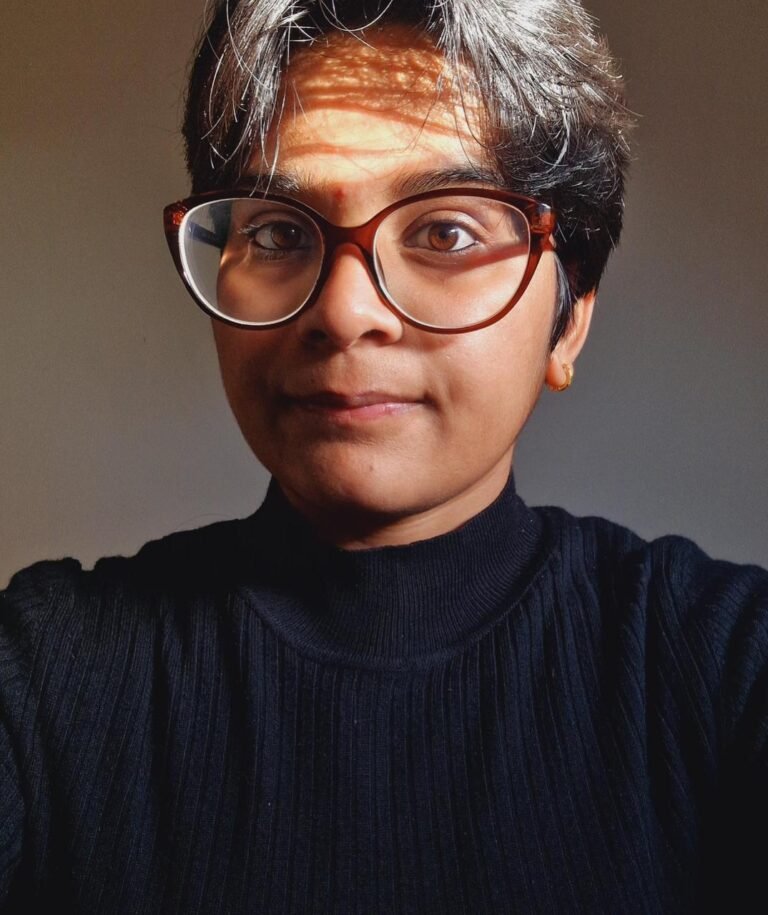
Sucheta Chaurasia
is a researcher and journalist with The Secularist. Previously, she has worked with print and digital news platforms in India and the UK, telling multimedia stories of human interests, community journalism, climate change, and socio-cultural politics.

