Since October 2023, Gaza has been put through an extent of suffering that no individual, no society, and no human civilisation as a whole in its entirety can truly comprehend. In that continuum of destruction and devastation, time and again, the boundaries of human endurance have been pushed beyond imagination; thousands and thousands of dreams have been eroded, and the sense of humanity has been put into question.
Yet amidst this depth of despair, something ties us together.
As humans, we are so used to pouring ourselves into building our homes, putting everything we have at stake, nurturing them with years of our lives, and then, one fine day, it is all gone. These buildings, as we often perceive them, are not simply structures made of bricks and concrete; they embody a feeling, an attachment, a sense of belonging that we call home.
Perhaps, unless we lose something, we don’t understand what it truly means. But for someone who has lost their home, even the destruction brings the depth of memories that cannot be broken away from so easily.
One such broken yet unbreakable story is Dima Al-Nairab, a 23-year-old resident of the Gaza Strip now bound to live in a tent in Mawasu Khanyounis. She reminisces about what her home once looked like in Rafah before the bulldozers tore through the place where her childhood memories were held and where her dreams once lived.
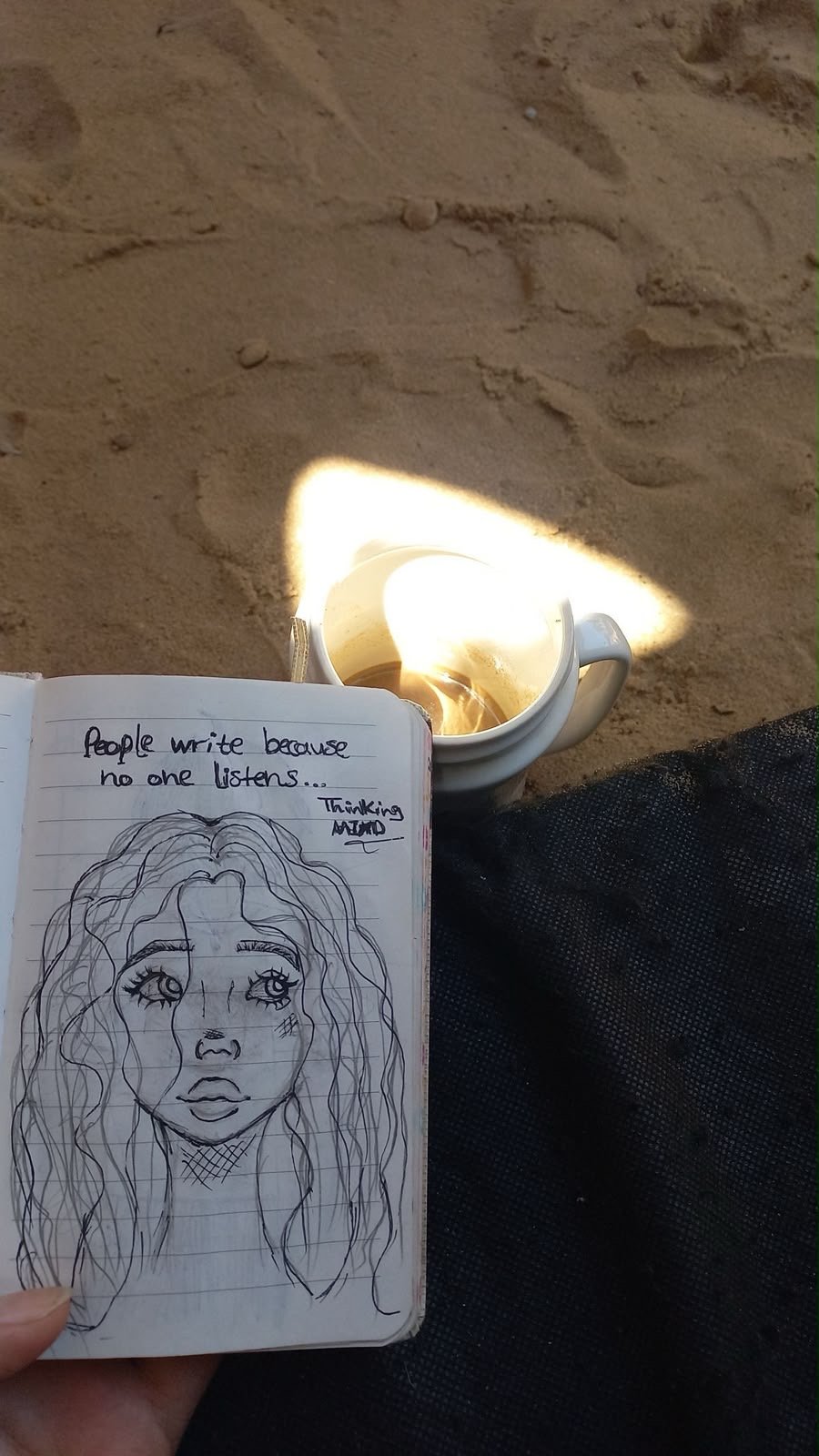
She said, “I had my own warm room and my own bed. My bedroom window overlooked our beautiful garden, which was filled with olive trees. I loved looking outside that window. I never imagined that one day I would lose that view forever.”
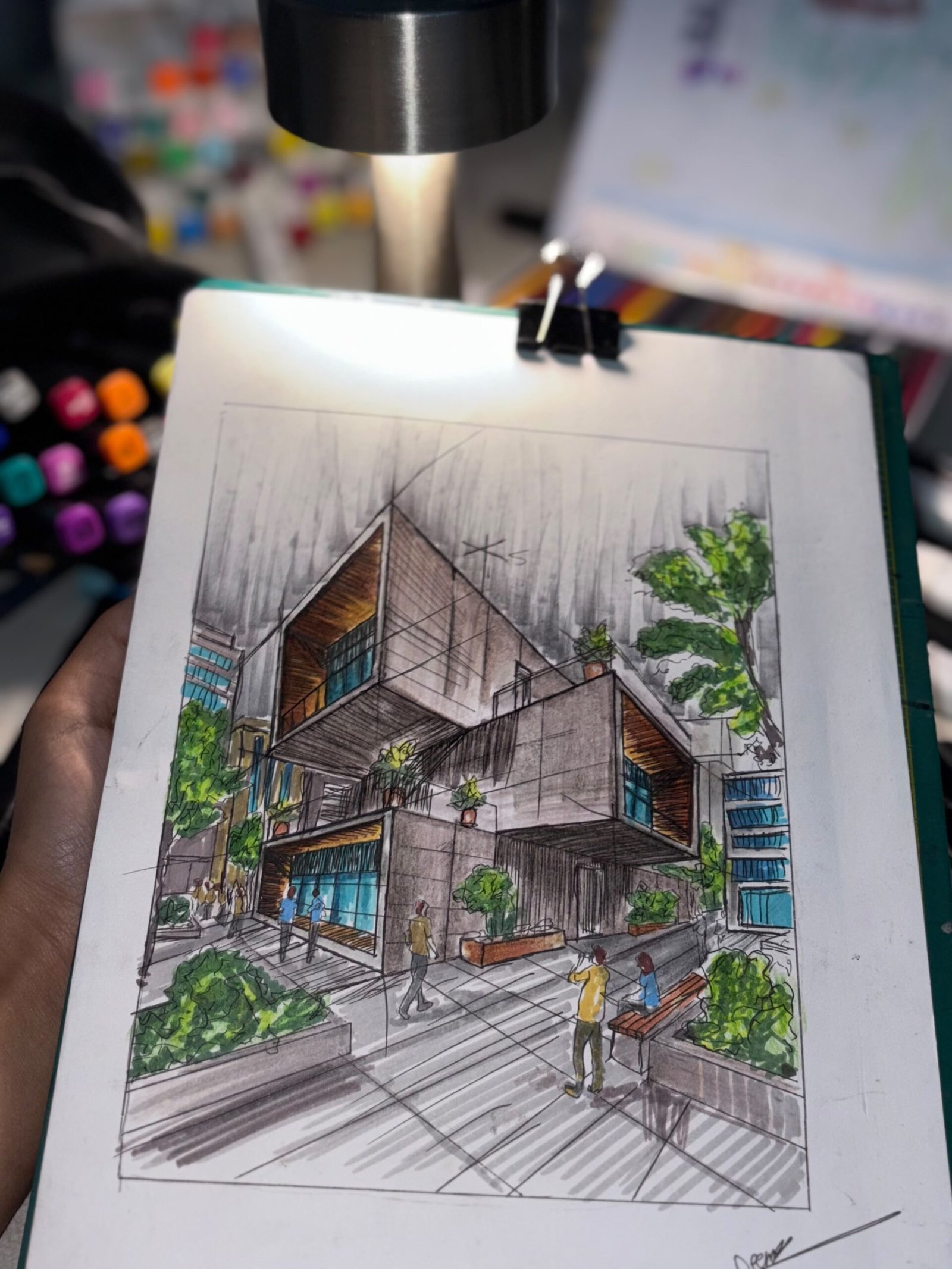
Having studied interior design at the College of Fine Arts with the hope of painting Gazan homes with colours, Dima graduated during a war, “only to witness homes being reduced to rubble”.
Her story, in many ways, is a powerful confrontation with the lows of life, marked by a sheer form of resilience and a rise after losing her home and facing the excruciating pain of persistent displacement. During her childhood years, she had difficult days that were marked by bombings and sounds. It was during the Palestinian uprisings and Israeli military incursions.
Not old enough to understand what displacement meant back then, she now experiences it every day, with financial problems staying like a constant member of the family. Her father married young without a degree and is unemployed at present. He is also dealing with diabetes while supporting a family of eight.
She grew up with her parents, two brothers and three sisters, and her memory lingers with a desperation for olives. She said, “I loved picking olives” because olives represent a large part of her Palestinian roots, identity, and land.”
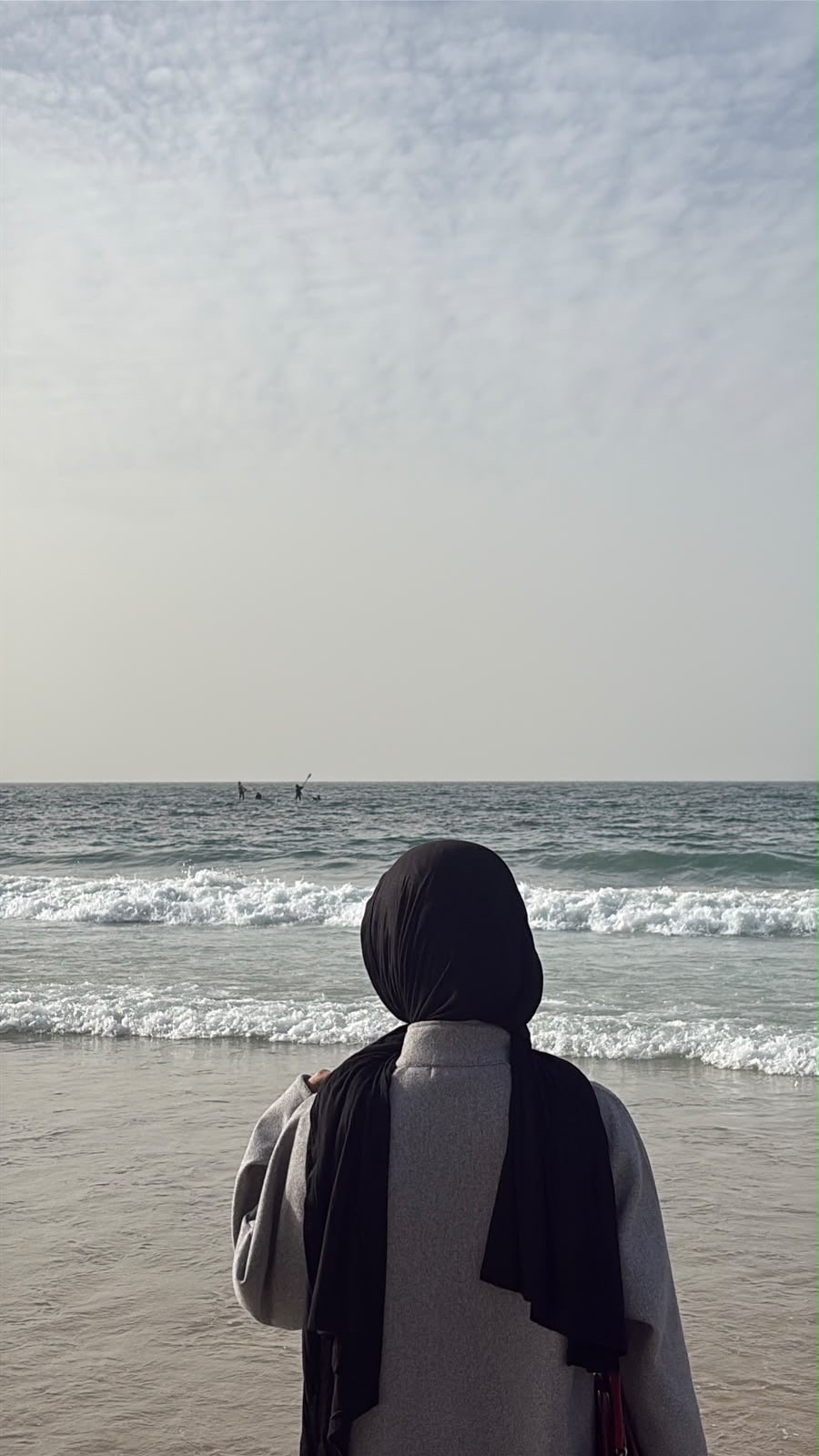
Her definition of home today remains at the heart of her memories and her trips to the sea in Rafah. The sea and the ships once represented beauty and freedom, not danger.
Despite being a topper throughout school and college, Dima does not have a room of her own; she said she is “struggling for a place to belong”.
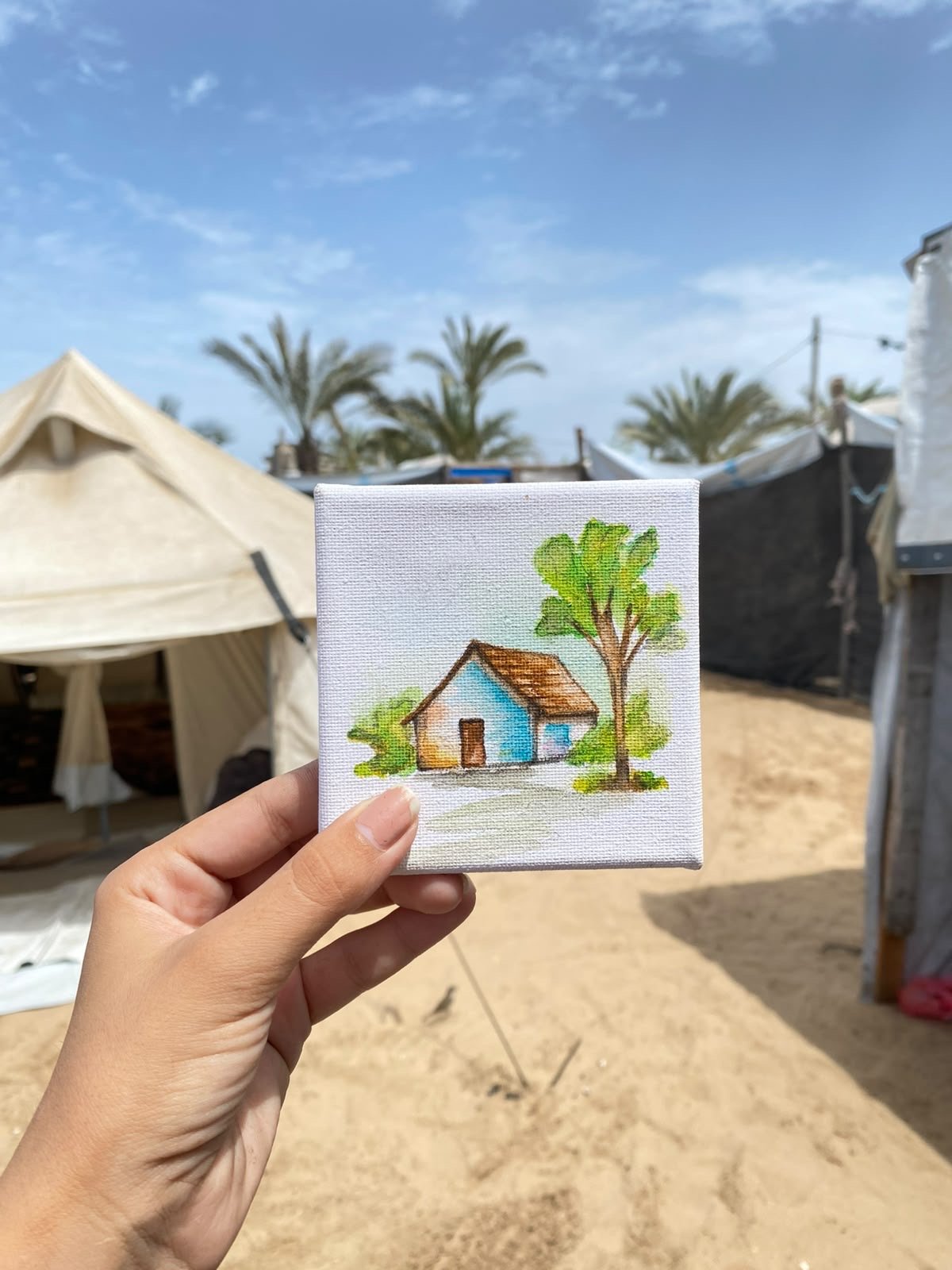
Dima found herself at a crossroads of a painful silhouette of contradictory reality. Writing and painting colour her mind, but her city walls are left empty. The streets are unrecognisable, and its people are unfamiliar, and some are nowhere to be found again. She shared how, when bombs showered like hailstorms in the night, those explosions took away the heart and the will to survive from every Palestinian.
Dima clutched her fourteen-year-old brother’s hand as they rushed to flee, while their mother hurried to gather a few belongings. The night was swallowed by darkness, and hope flickered like a fragile light against the shadows of despair.
“That night was hellishly terrifying. The car we were in nearly plunged from a high area as my sisters and I screamed in fear while the bombing warplanes continued overhead and scenes of dead ones lying…I lost my dearest cat, Pio, who quickly jumped out of my arms into the danger and who never came back,” she added with teary eyes.
She lost her uncle and her dear childhood friend, Nada. “All of these fears tore my heart apart at once.”
Making ends meet has become the biggest challenge when even basic needs can’t be met, including medication for their father’s diabetes, food, and drinking water. “Death is never far away. My father lost consciousness several times, and we waited for him to come back, sometimes asking door to door for a teaspoonful of sugar while other times, painfully cursing for being helpless,” she recalled.
Dima feels that losing a home means losing more than a place to live. Every year on Eid, she has a hard time celebrating, as her eyes can no longer hold the tears that roll down into the cusp of both her hands. She is broken and unable to see her loved ones.
This feeling doubles the wound of her scar, scabbed by displacement. It has afflicted many generations that came before her. Her grandparents underwent a forced displacement from Burayr, one of the villages in Palestine, during the Nakba, in 1948. Scattered and settled across different places, some of her relatives went to Jordan, some to Syria, where the Al-Nayrab Palestinian refugee camp is located, while part of the family settled in Gaza. However, Dima never got the chance to visit Burayr.
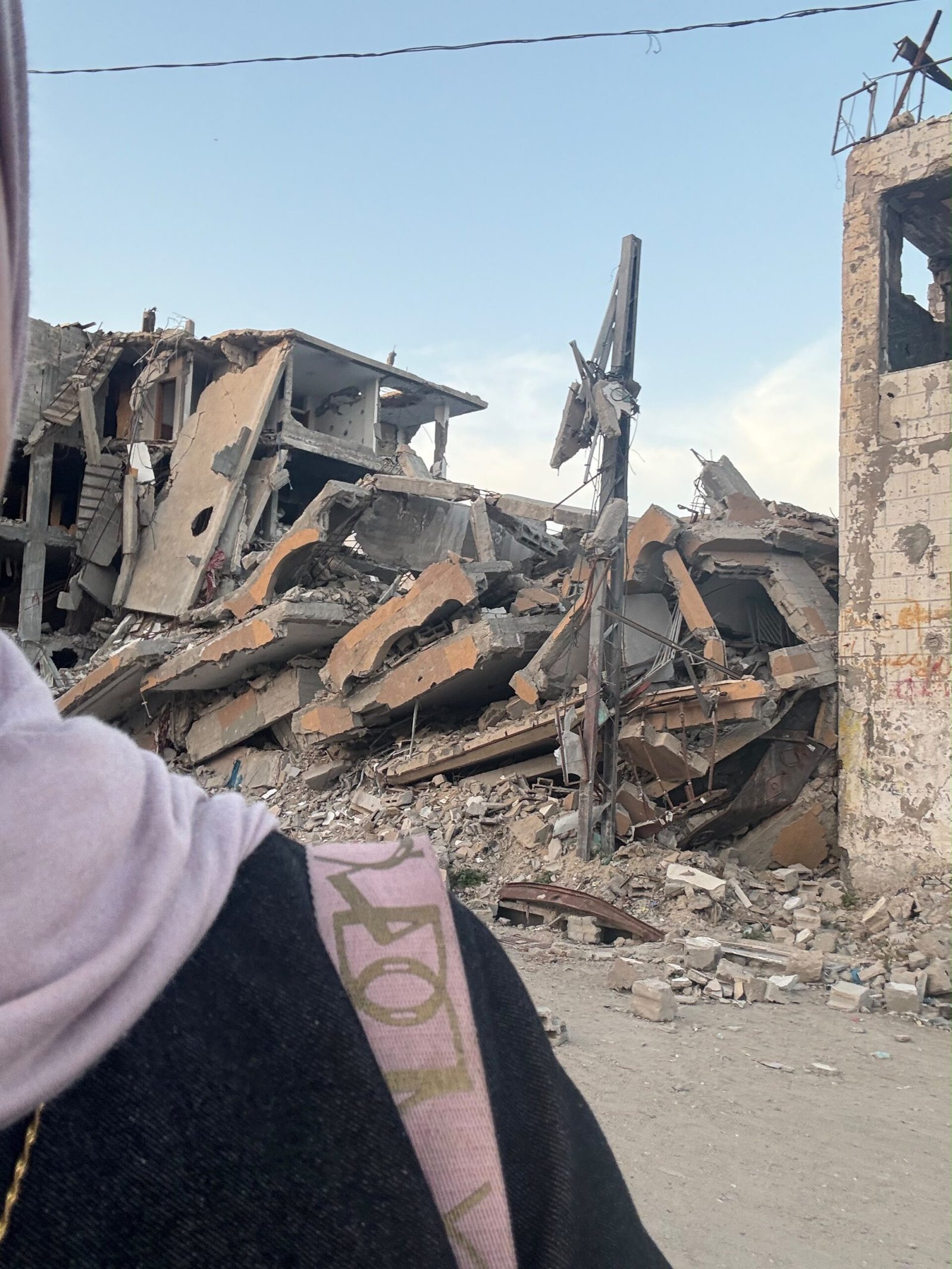
Years may have passed, and landscapes might be different, but the sense of losing home has endured for seven decades. The war has turned lives upside down in ways Dima cannot comprehend. She said, “I sometimes feel I am acting older as war deepens and escalates”. She then mourns and grieves her childhood and unfulfilled dreams, becoming nostalgic about the girl she was just before the war.
That girl, she says, is still somewhere inside her, but she carries so much pain now.
Displacement might be one part of Dima and her family’s story, but beyond that, she is left with a generational trauma that she is coping with the help of psychological treatment. Part of her treatment is about revisiting the past, which she can never return to.
Her story is not over yet.
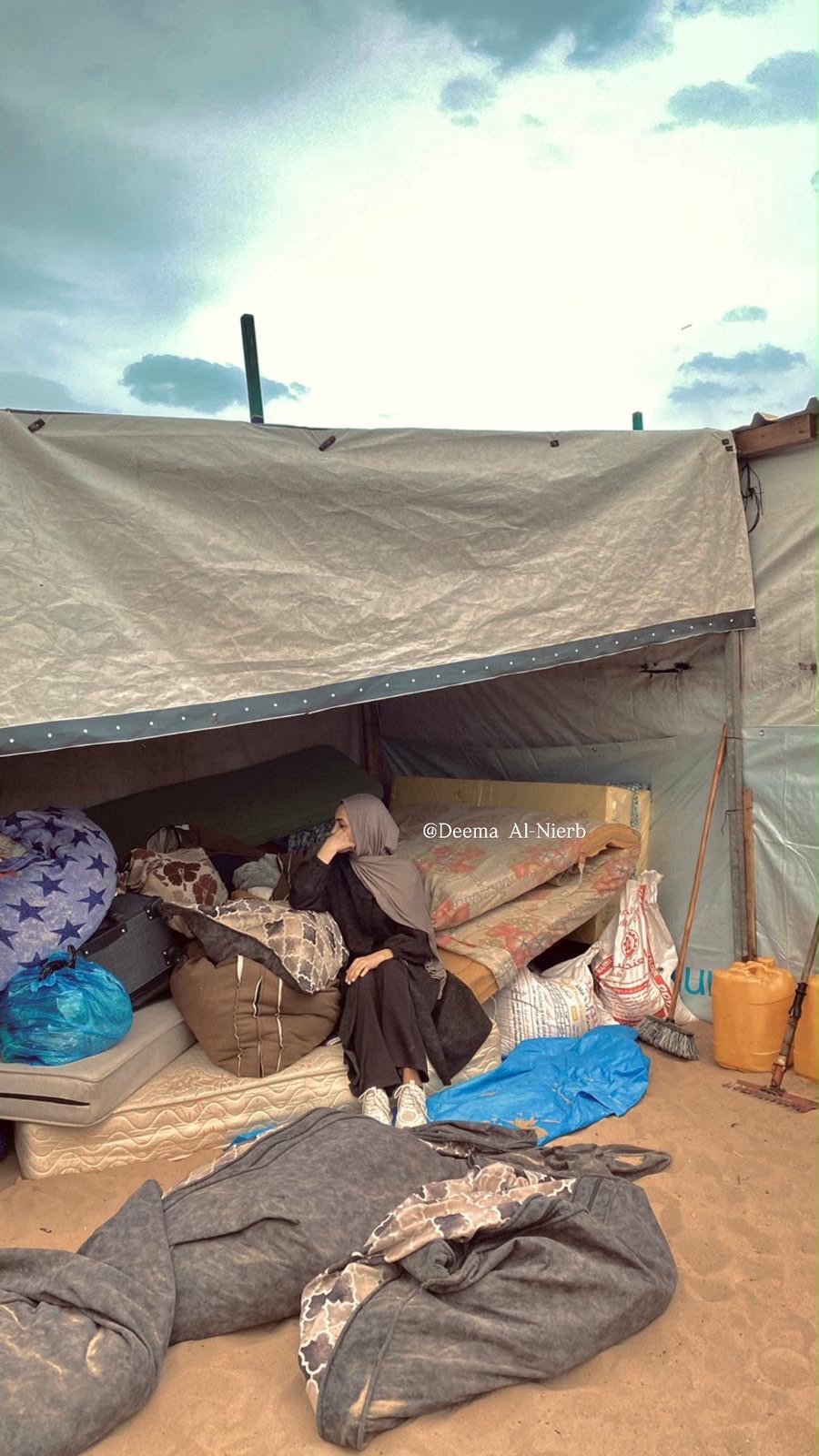
Beyond just the shared images of the number of people and buildings moved by destruction, it is the whole world of somebody who lived, who once went to school, painted, and dreamt, and this is something Dima carries forward because she does not want to be seen only as a girl living through war but to be the one remembered for once seeing life full of art and colours.
Despite that hope, Dima is unsure about finding her own work, design, and home again. She hopes for new generations to learn without knowing what bombing is, or the cost of displacement, hunger and death, before understanding their own lives.
Holding on to the spirit of olive trees, the sound of the sea, and the dear ones that she mourns every day, Dima still carries hope in her heart for a day when she can fall asleep without fearing she might never wake up again.
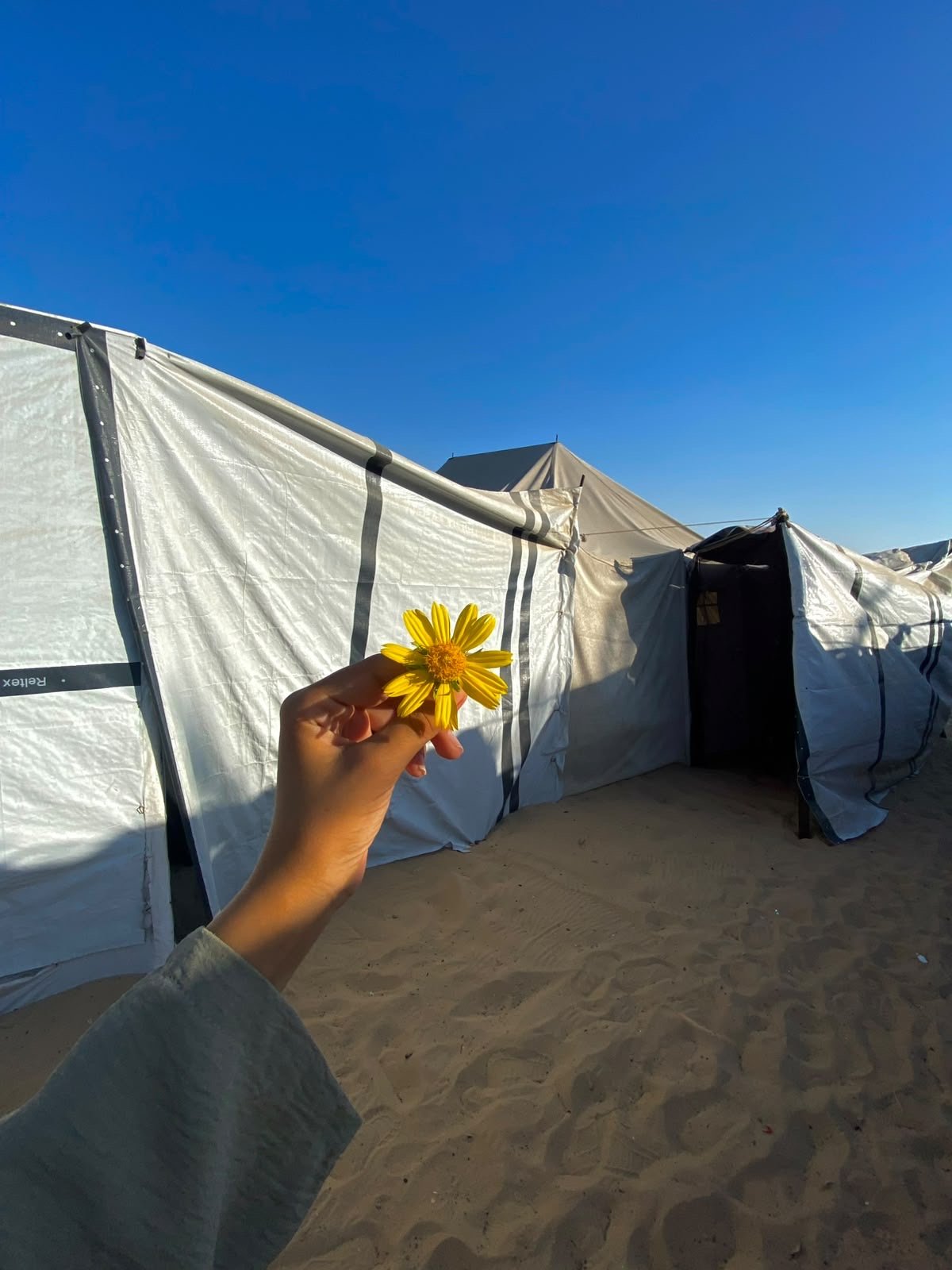
Today, when someone asks Dima how she survived the war, the details of the past emerge in fragments, all interrupted by memories that become too painful to revisit. For survival, after all, does not mark the end of suffering. And so her answer doesn’t come straight; it comes and goes like an episodic memory that unfolds in pieces, circling back to moments that refuse to settle into the past.